Overview
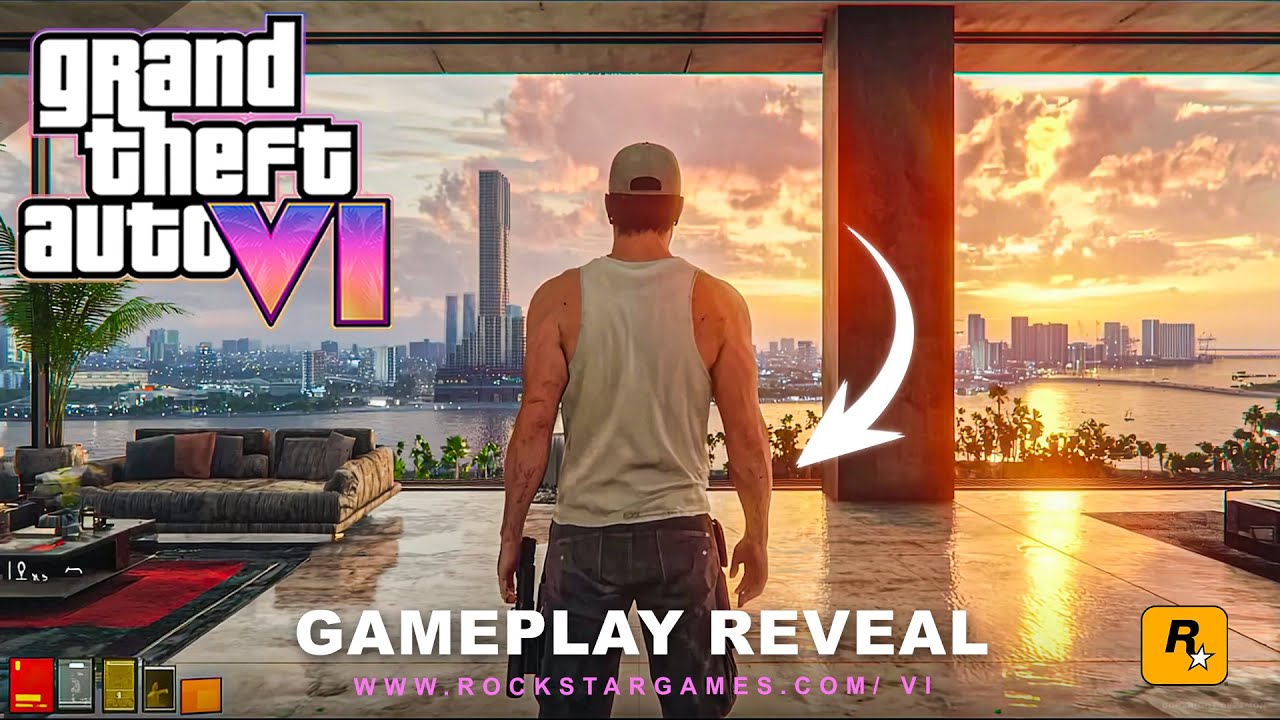
After more than a decade of anticipation, Grand Theft Auto VI finally arrives, bringing players back to the neon-soaked streets of Vice City with a scope and ambition that feels truly next-generation. Rockstar Games has crafted what might be their most technically impressive and narratively complex entry yet, featuring dual protagonists Lucia and Jason whose intertwined criminal saga spans across a meticulously recreated version of Florida called Leonida. The game successfully modernizes the GTA formula while maintaining the satirical edge and criminal playground mechanics that made the series legendary.
This isn’t just another GTA game – it’s a statement piece that pushes boundaries in open-world design, character development, and social commentary. From the moment you step into this sprawling criminal underworld, it’s clear that Rockstar has learned from their previous successes and failures, delivering an experience that feels both familiar and revolutionary.
Story & Setting
GTA VI’s narrative centers around Lucia, the series’ first playable female protagonist in the main storyline, and her partner-in-crime Jason. Their relationship forms the emotional core of a story that explores themes of loyalty, ambition, and survival in modern America. The writing showcases Rockstar’s trademark sharp wit while tackling contemporary issues like social media culture, cryptocurrency, and political polarization with surprising nuance.
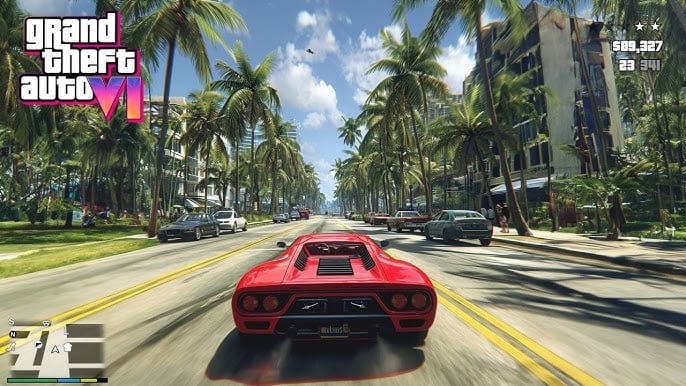
Leonida serves as a character unto itself, with Vice City returning as a gorgeous, sprawling metropolis that captures both the glamour and seediness of Miami. The map extends far beyond the city limits, encompassing swamplands, rural communities, and coastal towns that each feel distinct and lived-in. The attention to detail is staggering – from authentic Florida architecture to regional dialects that change as you travel across the state.
“The world feels alive in ways that previous GTA games could only dream of, with dynamic weather systems affecting both gameplay and NPC behavior in meaningful ways.”
Side missions and random encounters are more thoughtfully integrated into the world, often revealing deeper layers of the main story or providing commentary on specific locations. The supporting cast is memorable and well-developed, avoiding many of the stereotypes that occasionally plagued earlier entries in the series.
Gameplay
The core GTA formula remains intact but has been refined and expanded in significant ways. The dual protagonist system allows for seamless switching between Lucia and Jason, each bringing unique skills and mission approaches. Lucia excels at social engineering and infiltration, while Jason’s background lends itself to more direct confrontational approaches.
Combat has been overhauled with more realistic gunplay mechanics that strike a balance between arcade action and tactical shooting. The cover system is more intuitive, and weapon handling feels weighty and impactful. Hand-to-hand combat has also seen improvements, with a more fluid fighting system that incorporates environmental interactions.
Vehicle handling strikes an excellent middle ground between the floaty physics of GTA IV and the arcade-style driving of GTA V. Cars feel distinct and authentic, with a impressive roster ranging from economy cars to supercars, each with detailed interiors and realistic damage modeling.
- Enhanced heist mechanics with more player choice in planning and execution
- Improved AI that reacts more realistically to player actions
- Dynamic economy system affecting prices and availability of goods
- Weather and time-of-day impacts on mission design and NPC behavior
- More diverse mission structure with multiple solution paths
The wanted system has been completely redesigned, moving away from the simple star rating to a more nuanced law enforcement response that considers factors like location, severity of crimes, and witness testimony. This creates more organic chase sequences and makes criminal activity feel more consequential.
Graphics & Sound
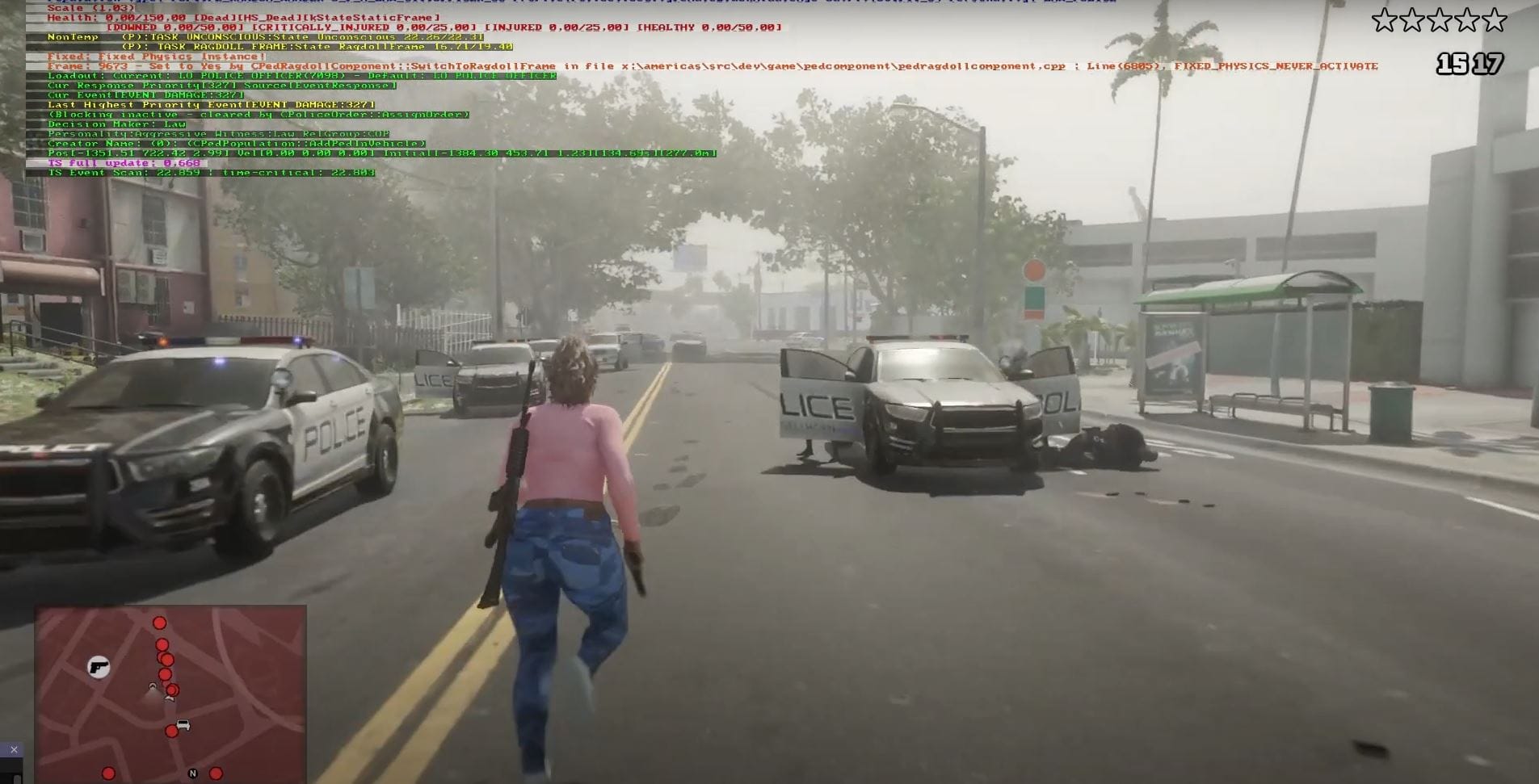
Visually, GTA VI is nothing short of spectacular. The RAGE engine has been pushed to its limits, delivering photorealistic environments that showcase incredible attention to detail. Character animations are fluid and natural, with facial expressions and body language that bring the cast to life in unprecedented ways.
The lighting system deserves special mention – neon signs reflect convincingly off wet pavement, sunsets paint the sky in brilliant oranges and purples, and interior lighting creates atmosphere that enhances every location. Ray tracing implementation on supported platforms adds another layer of visual fidelity that makes exploration a constant pleasure.
Audio design maintains Rockstar’s high standards with an eclectic soundtrack spanning multiple radio stations that perfectly capture different aspects of the game’s world. Voice acting across the board is exceptional, with Lucia and Jason’s performers delivering nuanced portrayals that sell both their individual struggles and their complex relationship.
“The ambient sound design creates an incredible sense of place – from the distant hum of traffic to the subtle audio cues that make each neighborhood feel unique.”
Environmental audio reacts dynamically to player actions and location, with sound propagation that affects both stealth gameplay and general immersion. The thunderous bass of a muscle car echoing off skyscrapers or the muffled chaos of a shootout heard from inside a building all contribute to the game’s remarkable audio landscape.
Performance
On PlayStation 5 and Xbox Series X, GTA VI runs at a stable 30fps in Quality mode with full ray tracing enabled, or 60fps in Performance mode with reduced visual fidelity. The PC version offers the most flexibility, supporting up to 4K resolution at 60fps on high-end hardware, though the game is notably demanding on system resources.
Load times are impressively brief on next-gen consoles thanks to SSD optimization, with fast travel and mission restarts taking mere seconds. The game makes excellent use of the DualSense controller’s haptic feedback, providing tactile sensations for everything from different weapon types to various vehicle engines.
Some minor frame drops occur during particularly chaotic sequences with multiple explosions and heavy traffic, but these are rare and don’t significantly impact the experience. The game’s memory management has been optimized to eliminate the pop-in issues that occasionally affected previous entries.
Technical Issues
At launch, GTA VI is relatively stable with few game-breaking bugs. Occasional clipping issues and minor AI pathfinding problems exist but are infrequent enough to not detract from the overall experience. Online connectivity for certain features can be inconsistent during peak hours, though this is likely to improve as server capacity is optimized.
System Requirements
Key Features
- ✓ Dual protagonist system with Lucia and Jason
- ✓ Massive recreation of Florida (Leonida) including Vice City
- ✓ Enhanced heist mechanics with multiple approach options
- ✓ Revolutionary RAGE engine with ray tracing support
- ✓ Dynamic weather and day/night cycle affecting gameplay
- ✓ Redesigned wanted system with realistic law enforcement
Verdict
Grand Theft Auto VI successfully modernizes and evolves the series while maintaining the core elements that made it a cultural phenomenon. The dual protagonist system adds narrative depth without complicating the gameplay, while the enhanced world simulation creates emergent moments that feel organic and meaningful.
While some may find the game’s satire occasionally heavy-handed, and certain mission structures can feel familiar despite the new setting, these are minor complaints against what is ultimately a masterfully crafted open-world experience. The technical achievements alone would make this noteworthy, but it’s the way everything comes together – story, gameplay, presentation, and world design – that makes GTA VI truly special.
This is essential gaming for anyone interested in open-world design, narrative complexity, or simply experiencing one of the most detailed and engaging virtual worlds ever created. Rockstar has once again proven why they remain the masters of the criminal sandbox genre.
“GTA VI doesn’t just meet the impossibly high expectations – it exceeds them in ways that will influence open-world game design for years to come.”