

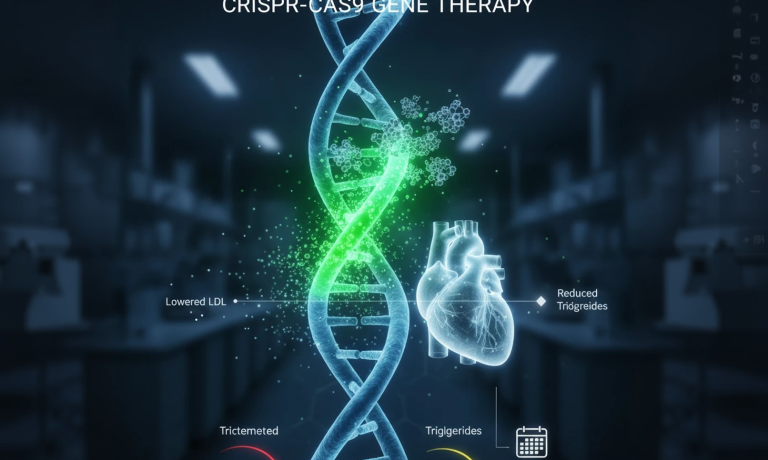
CRISPR One-Shot Therapy Halves “Bad” Cholesterol in Early Human Study
November 2025 — A first-in-human, Phase 1 trial reports that a single infusion of a CRISPR-Cas9 gene-editing therapy safely reduced LDL cholesterol and triglycerides by roughly 50% in people with difficult-to-treat lipid disorders. The early findings suggest a potential one-and-done approach to cardiovascular risk reduction if results hold in larger, longer studies.
What’s new
Researchers tested an in-vivo CRISPR medicine designed to dial down liver production of key lipid drivers. In the highest dose cohort, participants saw rapid and sustained drops in both LDL-C and triglycerides without serious safety signals in this small group.
How it works
The therapy uses a guide RNA and Cas9 to edit a liver gene central to lipid metabolism, lowering production at the source. Because liver cells are long-lived, the effect could persist for years, potentially replacing chronic daily pills and periodic injections.
Headline results
- LDL-C: ~50% reduction from baseline at the top dose.
- Triglycerides: ~50% reduction in the same cohort.
- Safety: No dose-limiting toxicities reported in this interim look; monitoring continues.
Why it matters
Cardiovascular disease remains the world’s leading killer. A durable, one-time edit that simultaneously lowers LDL and triglycerides could transform prevention for patients who cannot reach targets with statins, ezetimibe, or PCSK9 therapies alone.
What’s next
Researchers plan Phase 1b/2 trials to confirm dose, durability, and outcomes across broader populations. Key questions include long-term safety, edit precision in humans, and comparative effectiveness versus current standard therapies.
Bottom line: It’s early—but if subsequent trials replicate these results, CRISPR could inaugurate a new class of “one-and-done” cardiometabolic treatments.