Overview
In the Valley of Gods emerges as a haunting testament to atmospheric storytelling and exploration-driven gameplay. Developed by Campo Santo, the studio behind the acclaimed Firewatch, this ambitious project transports players to 1920s Egypt where mystery, archaeology, and personal drama intertwine in unexpected ways. After years of development uncertainty following Valve’s acquisition of Campo Santo, the game finally arrives as a refined experience that builds upon the studio’s narrative strengths while expanding into new mechanical territories.
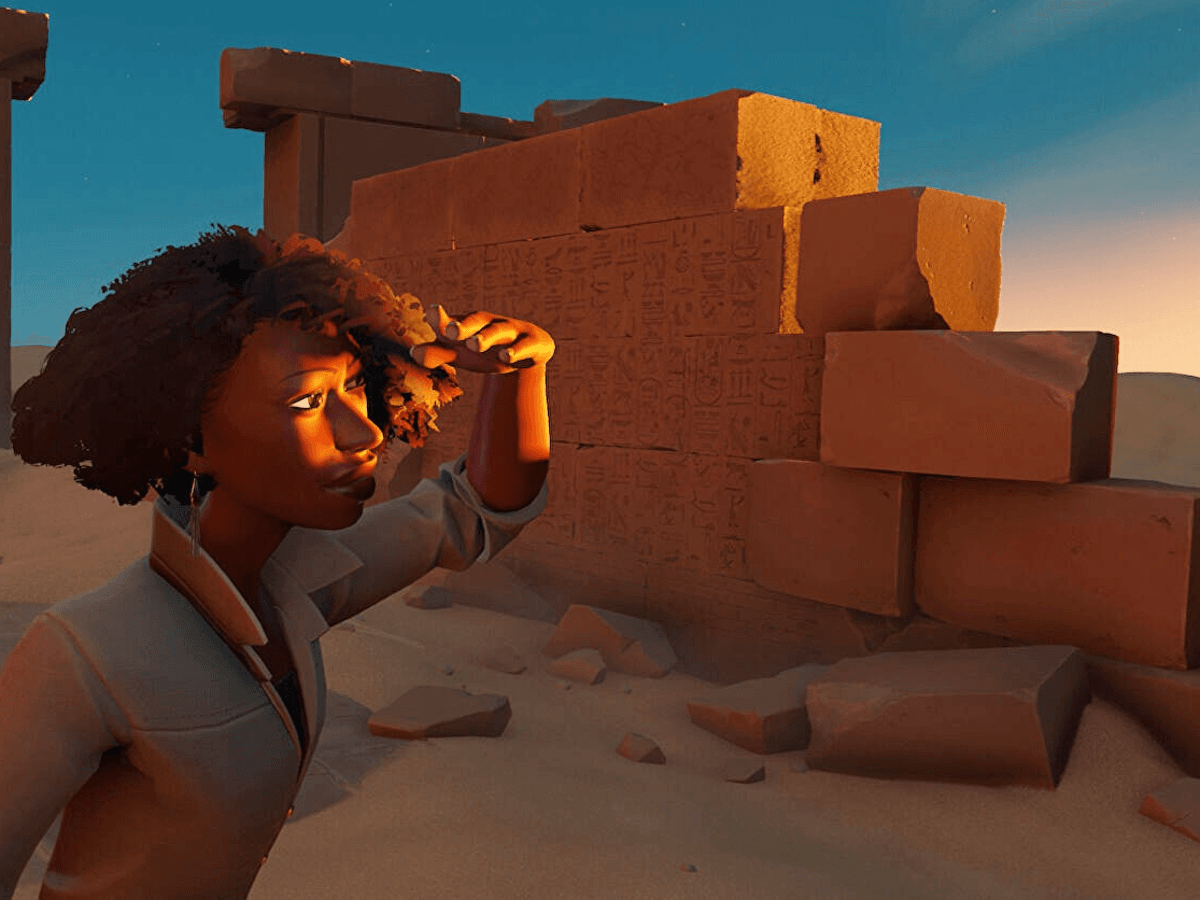
Set against the backdrop of post-World War I Egypt, players assume the role of Rashida, a pioneering female archaeologist and filmmaker documenting ancient sites during the golden age of archaeological discovery. What begins as a routine expedition quickly evolves into something far more complex, blending historical authenticity with supernatural elements that challenge both the protagonist’s scientific worldview and the player’s expectations.
Story & Setting
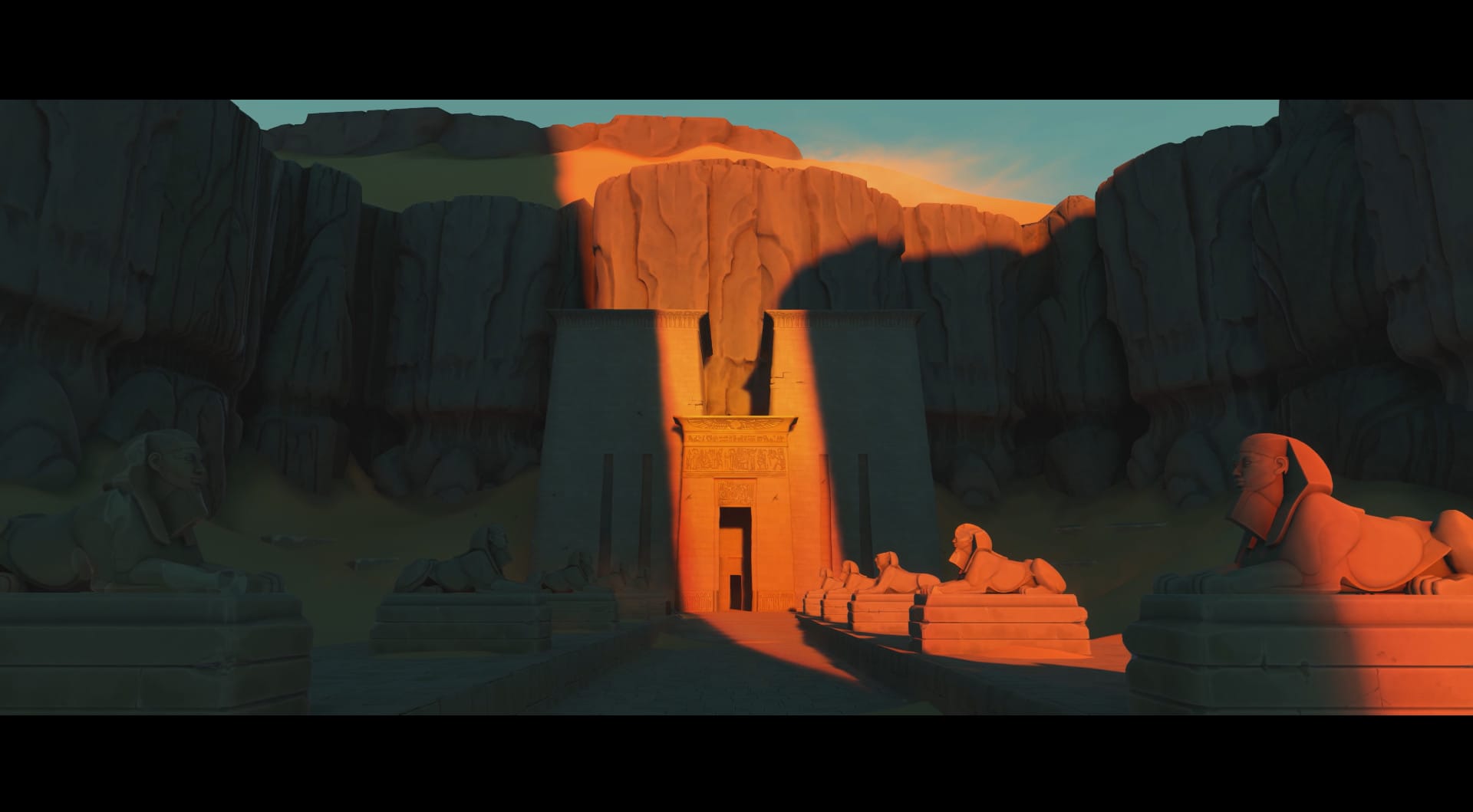
The narrative foundation of In the Valley of Gods rests on meticulous historical research and genuine respect for Egyptian culture and archaeology. Rashida’s journey unfolds through multiple layers of storytelling – her present-day exploration, the ancient mysteries she uncovers, and the personal relationships that complicate her mission. The writing demonstrates Campo Santo’s signature naturalistic dialogue, with conversations flowing organically as characters navigate professional tensions and personal revelations.
The 1920s setting provides rich historical context, capturing the era’s complex colonial dynamics and the emerging recognition of Egypt’s right to its own archaeological heritage. Rather than glorifying Western archaeologists as tomb raiders, the game thoughtfully examines the ethical implications of cultural preservation versus exploitation. Rashida’s character serves as an interesting lens through which to explore these themes, as someone operating within colonial structures while maintaining genuine respect for the cultures she studies.
“The desert keeps its secrets until it’s ready to share them. We’re just here to listen.” – Rashida’s opening monologue sets the contemplative tone perfectly.
Supporting characters feel authentically motivated, from local workers who possess deep knowledge of the sites to British officials whose bureaucratic concerns often clash with archaeological priorities. The supernatural elements, when they emerge, feel earned rather than forced, growing naturally from the established atmosphere of mystery and ancient power.
Gameplay
In the Valley of Gods expands beyond Campo Santo’s previous walking simulator approach, incorporating puzzle-solving, documentary filmmaking mechanics, and light survival elements. The core gameplay loop revolves around exploration and documentation, with players using period-appropriate camera equipment to record discoveries and interviewing expedition members to build a comprehensive record of their findings.
The puzzle design cleverly integrates archaeological methodology, requiring players to carefully examine artifacts, cross-reference historical documents, and piece together clues about ancient burial practices and religious beliefs. These challenges feel intellectually satisfying without becoming overly complex, maintaining accessibility while respecting player intelligence.
- Documentary mechanics allow players to choose filming angles, interview subjects, and edit sequences
- Archaeological puzzles require logical deduction and historical knowledge
- Camp management adds light survival elements without overwhelming the narrative focus
- Dialogue trees influence relationships and story outcomes organically
- Environmental storytelling rewards careful observation and exploration
The filmmaking system deserves particular praise for its intuitive interface and meaningful impact on the narrative. Players’ documentary choices influence how other characters perceive Rashida’s work and can open or close certain story paths. This mechanic reinforces the game’s themes about perspective, documentation, and the power of storytelling itself.
Graphics & Sound
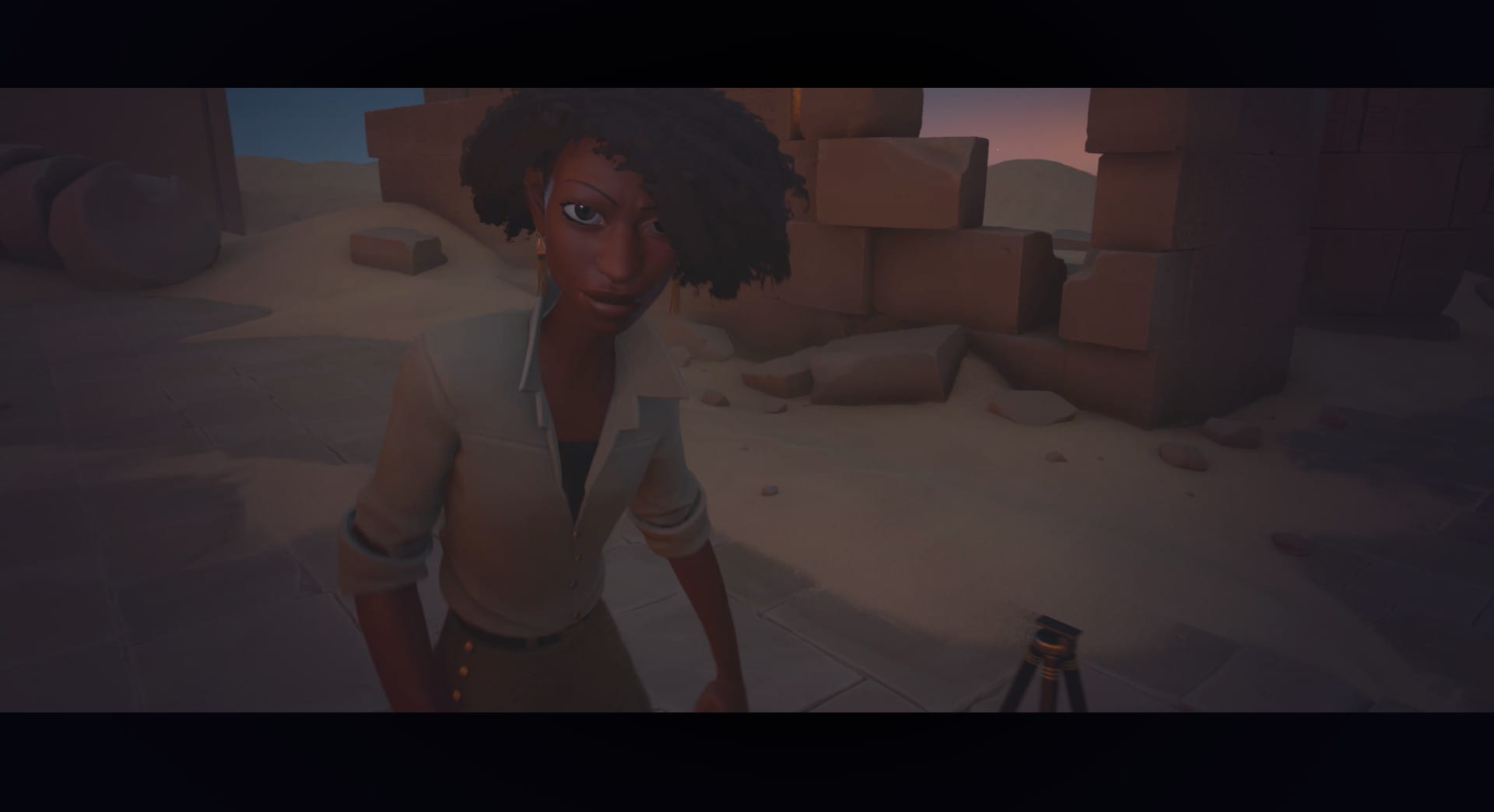
Visually, In the Valley of Gods presents a stunning realization of 1920s Egypt through a distinctive art style that balances photorealism with painterly aesthetics. The desert landscapes feel vast and mysterious, with dynamic lighting systems that capture the harsh beauty of the archaeological sites. Character models show significant improvement over Firewatch, with more detailed facial animations that enhance the naturalistic dialogue delivery.
The archaeological sites themselves are masterfully crafted, showing careful attention to historical accuracy while incorporating the fantastical elements seamlessly. Tomb interiors feature intricate hieroglyphic work and authentic architectural details that reward close examination. The camera mechanics allow players to appreciate these visual details while serving the gameplay documentation systems.
Sound design creates an immersive audio landscape that enhances the mysterious atmosphere. The desert’s subtle ambient sounds – wind across sand, distant bird calls, the creak of wooden equipment – establish a convincing sense of place. Voice acting maintains Campo Santo’s high standards, with performances that feel conversational rather than theatrical, grounding even supernatural moments in emotional reality.
The musical score, composed by Chris Remo, blends period-appropriate instrumentation with modern atmospheric techniques. Traditional Middle Eastern instruments weave through contemporary ambient compositions, creating a unique soundscape that respects the cultural setting while serving the game’s supernatural elements.
Performance
Technical performance proves generally solid across platforms, though some minor issues persist at launch. PC version runs smoothly on recommended specifications, with excellent optimization for mid-range hardware. Loading times remain minimal, maintaining narrative immersion during transitions between areas.
Console versions perform admirably, with PlayStation 5 taking advantage of the SSD for seamless world streaming and adaptive trigger feedback that enhances camera operation and archaeological tool use. Xbox Series X delivers comparable performance with slightly faster loading on certain sequences.
Minor bugs occasionally interrupt dialogue sequences, and some players may experience texture pop-in during rapid camera movements while filming. These issues feel cosmetic rather than game-breaking and will likely be addressed in post-launch updates. The save system works reliably, with multiple checkpoint options that respect player time investment.
System Requirements
Key Features
- ✓ Documentary filmmaking mechanics
- ✓ Historically accurate 1920s Egypt setting
- ✓ Archaeological puzzle solving
- ✓ Naturalistic dialogue and character development
- ✓ Multiple narrative paths and endings
- ✓ Atmospheric exploration and environmental storytelling
Verdict
In the Valley of Gods succeeds as both a worthy successor to Firewatch and an evolution of Campo Santo’s design philosophy. The expanded gameplay mechanics feel purposeful rather than obligatory, serving the narrative themes while providing engaging interactive challenges. The historical setting receives respectful treatment that educates without lecturing, and the supernatural elements enhance rather than overwhelm the archaeological mystery.
While some players expecting more traditional adventure game mechanics might find the pacing deliberate, those who appreciate atmospheric storytelling will discover a rich, contemplative experience. The documentary filmmaking system adds meaningful replay value, encouraging multiple playthroughs to explore different narrative perspectives.
Campo Santo has crafted an intelligent, emotionally engaging adventure that demonstrates how narrative-focused games can expand their mechanical scope without losing their essential character. In the Valley of Gods stands as one of the year’s most thoughtful and atmospheric gaming experiences, offering players a journey through history, mystery, and personal discovery that lingers long after the credits roll.