It’s been over five years since CD Projekt Red dropped us headfirst into the neon-soaked chaos of Night City, and the wounds — and the wonder — still feel fresh. Cyberpunk 2077 had one of the most turbulent launches in gaming history, yet somehow clawed its way back to become one of the most beloved RPGs of its generation, eventually selling over 25 million copies and earning a second life through the Phantom Liberty expansion and the Netflix series Edgerunners. Now, with the gaming world firmly in its 2026 stride — PlayStation 6 on store shelves, Xbox Series X2 announced, and PC hardware pushing into RTX 5090 territory — CD Projekt Red is ready to swing again. The project, internally codenamed Orion and widely expected to ship as Cyberpunk 2078, is shaping up to be the studio’s most ambitious undertaking yet. Here’s everything we know so far.
CD Projekt Red officially confirmed Project Orion back in late 2022 as part of its broader “Strategy Update,” outlining a multi-game roadmap that would expand both the Cyberpunk and The Witcher universes simultaneously. At the time, it was a distant promise — a blinking light at the end of a very long tunnel. Fast forward to 2026, and that light is considerably brighter. The studio’s Boston office, established in partnership with key Cyberpunk 2077 developers who relocated stateside, is now reportedly staffed with over 250 developers, with the total headcount across Warsaw and Boston pushing past 600 people actively working on the project.
What makes Orion particularly exciting isn’t just the pedigree — it’s the philosophy driving it. CDPR has spent the post-2077 years essentially rebuilding its creative and technical infrastructure from the ground up. The studio migrated from its proprietary REDengine to Unreal Engine 5, and the lessons learned from the catastrophic 2020 launch have been baked directly into how this new game is being designed, tested, and communicated to the public. There’s a careful, almost surgical restraint in how CDPR is talking about this one — and frankly, after what happened last time, that’s exactly the right move.
What We Know About the Story and Setting
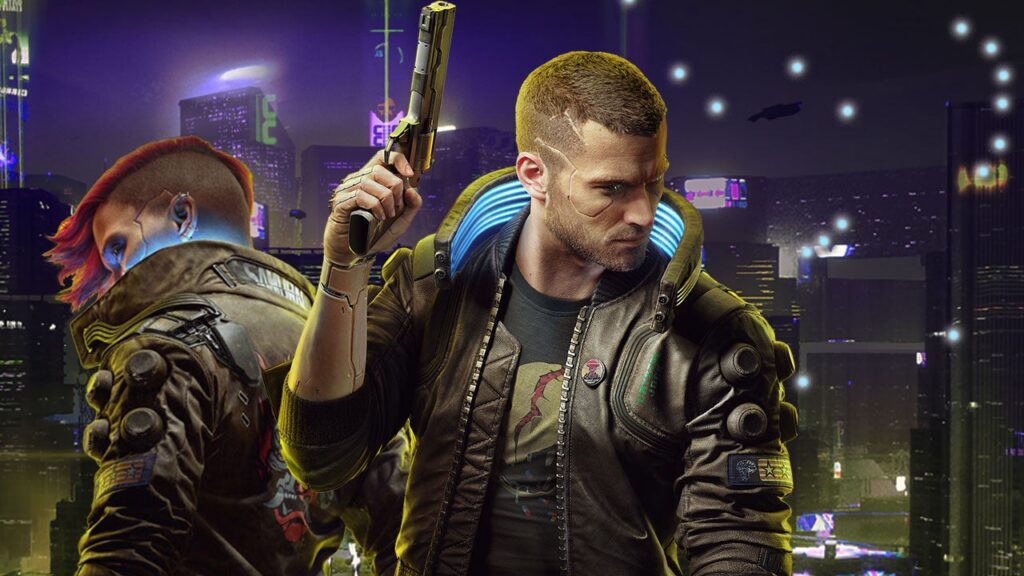
CDPR has been tightlipped on narrative specifics, but a handful of confirmed details and credible leaks have started to paint a picture. The game is expected to move away from Night City — or at least expand significantly beyond it. According to a report from IGN citing studio insiders in early 2025, Project Orion will introduce a new protagonist rather than continuing V’s story. This aligns with CDPR’s explicit goal of building a “universe” rather than a single ongoing narrative, much like how CD Projekt framed the transition between Geralt and Ciri in The Witcher series.
The time jump implied by the “2078” branding — whether or not that ends up being the final subtitle — gives the writers enormous creative latitude. The source material, Mike Pondsmith’s Cyberpunk tabletop universe, is rich with unexplored eras, factions, and geographies. Rumors point to a setting that incorporates a second major metropolitan hub alongside a returning Night City, potentially a coastal megaplex inspired by real-world cities along the Gulf Coast or the Pacific Northwest. Pondsmith himself has been actively collaborating with CDPR on this project, lending it an authenticity that should please longtime fans of the tabletop RPG.
“We want every new game in the Cyberpunk universe to stand completely on its own — a new entry point, a new hero, but the same DNA.” — CD Projekt Red, Strategy Update 2022
Thematically, early concept language circulating online suggests the new game will lean harder into questions of digital consciousness, corporate sovereignty, and post-scarcity inequality — themes that feel even more prescient in 2026 than they did in 2020, given real-world AI legislation battles and the explosive growth of neural interface technology companies like Neuralink and its competitors.
Technical Ambitions: Unreal Engine 5 and Next-Gen Hardware
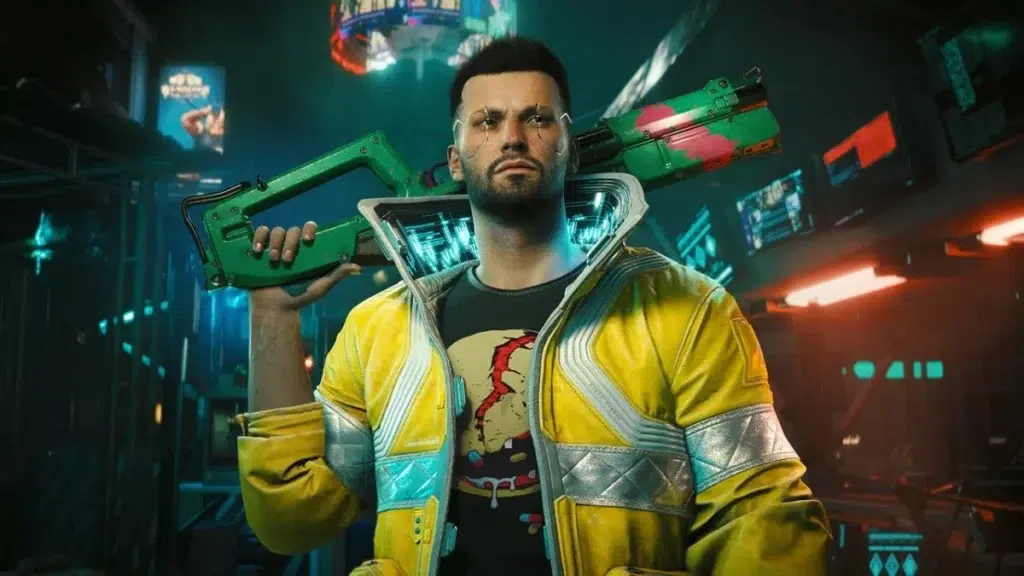
The switch to Unreal Engine 5 is arguably the single most consequential decision CDPR has made for this project. REDengine, while powerful, was notoriously difficult to optimize across hardware tiers — a core reason why the last-gen versions of Cyberpunk 2077 were such a disaster at launch. UE5’s Nanite virtualized geometry and Lumen global illumination systems give CDPR a foundation that scales far more gracefully, and the engine’s ecosystem means better tooling, faster iteration, and a larger pool of talent to draw from.
From a hardware standpoint, Orion is being developed as a next-gen-first title. Target platforms are expected to be PlayStation 6 (launched in November 2025 at $499), Xbox Series X2 (announced for Holiday 2026 at a rumored $549), and PC. There is currently no indication of a last-gen version — a promise CDPR made early and appears to be honoring. On PC, early developer commentary suggests the game will be optimized for NVIDIA RTX 4080/5070-class hardware as the recommended tier, with full path tracing support requiring an RTX 5080 or equivalent AMD RDNA 4 card.
- Target Resolution: Native 4K on PS6 and Xbox Series X2 at 60fps (Performance Mode); 4K/30fps with full ray tracing in Fidelity Mode
- PC Recommended GPU: NVIDIA RTX 5070 / AMD RX 9700 XT (approximately $599–$649 MSRP as of Q1 2026)
- Engine: Unreal Engine 5.4+
- Storage: Estimated 120–150GB install, NVMe SSD required on PC
- Ray Tracing: Full path tracing support confirmed for high-end configurations
CDPR has also emphasized a close partnership with NVIDIA on DLSS 4 integration and frame generation technology, which should give mid-range PC players a viable path to smooth performance even without top-tier silicon. Given that the average PC gaming rig in 2026 still centers around RTX 3070/4060-class cards according to Steam Hardware Survey data, that optimization headroom matters enormously for commercial success.
Release Window, Price, and What to Expect at Launch
Here’s where expectations need to be carefully managed. As of mid-2026, CD Projekt Red has not announced a release date or even a concrete release window for Project Orion. Industry analysts tracking CDPR’s hiring patterns and development timelines — including those at Bloomberg‘s Jason Schreier and GameInformer‘s research desk — broadly estimate a 2028 release window as the most realistic target, with 2027 being possible but aggressive. The studio has repeatedly stated its intention never to rush a release again, and with the financial cushion provided by 2077‘s sustained sales and The Witcher franchise’s ongoing revenues (The Witcher 4, codenamed Polaris, is expected to launch in late 2026), they have the runway to wait.
Pricing will almost certainly reflect the new industry standard. With $79.99 now the baseline AAA price point following the 2025 price hikes from Sony, Microsoft, and major third-party publishers, expect Orion to launch at no less than that. A Collector’s Edition — CDPR does love a collector’s edition — will likely push into the $120–$200 range, and a Season Pass or expansion model similar to Phantom Liberty is essentially a given.
What fans should realistically expect at launch, given everything CDPR has signaled: a single-player-focused RPG with no live service elements at launch, a deep narrative campaign in the 40–60 hour range, a vastly improved open world with denser systemic simulation than 2077, and an expanded character build system that takes the best of the base game and Phantom Liberty’s reworked skill trees and pushes them further. Multiplayer remains a long-term aspiration the studio has discussed, but it will not be part of the initial release.
The Verdict
It’s easy to be both thrilled and cautious about Cyberpunk 2078 — or whatever CDPR ends up calling it. The studio has demonstrated, painfully and publicly, that it can stumble catastrophically and still produce something genuinely special. The difference this time is that they’re building with eyes wide open: a new engine, a new platform ecosystem designed for their vision, a co-development structure that distributes risk, and — crucially — enough institutional memory to know what breaking promises costs you. The 2026 gaming landscape is crowded and unforgiving, with players more skeptical of hype than ever before. But if any studio has earned a second swing at defining a generation, it’s CD Projekt Red.
We’ll be watching every job listing, every earnings call hint, and every carefully worded developer tweet between now and whenever CDPR decides Night City — or whatever city comes next — is ready to open its doors again. Stay tuned to PixlRun for every update as it breaks.