It has been over a year since Apple dropped the original Vision Pro on an unsuspecting world, charging an eye-watering $3,499 for what many called the most ambitious — and most polarizing — consumer gadget in a decade. Sales were modest at best, critics were loud, and the question on every tech enthusiast’s lips was simple: where does Apple go from here? As it turns out, Apple hasn’t been sitting still. Rumors, leaks, and supply chain whispers have been building steadily through early 2026, and what’s emerging paints a picture of a Vision Pro 2 that could be a genuine course correction — or another expensive swing at a category Apple is still figuring out in real time.
The Chip Inside Could Change Everything
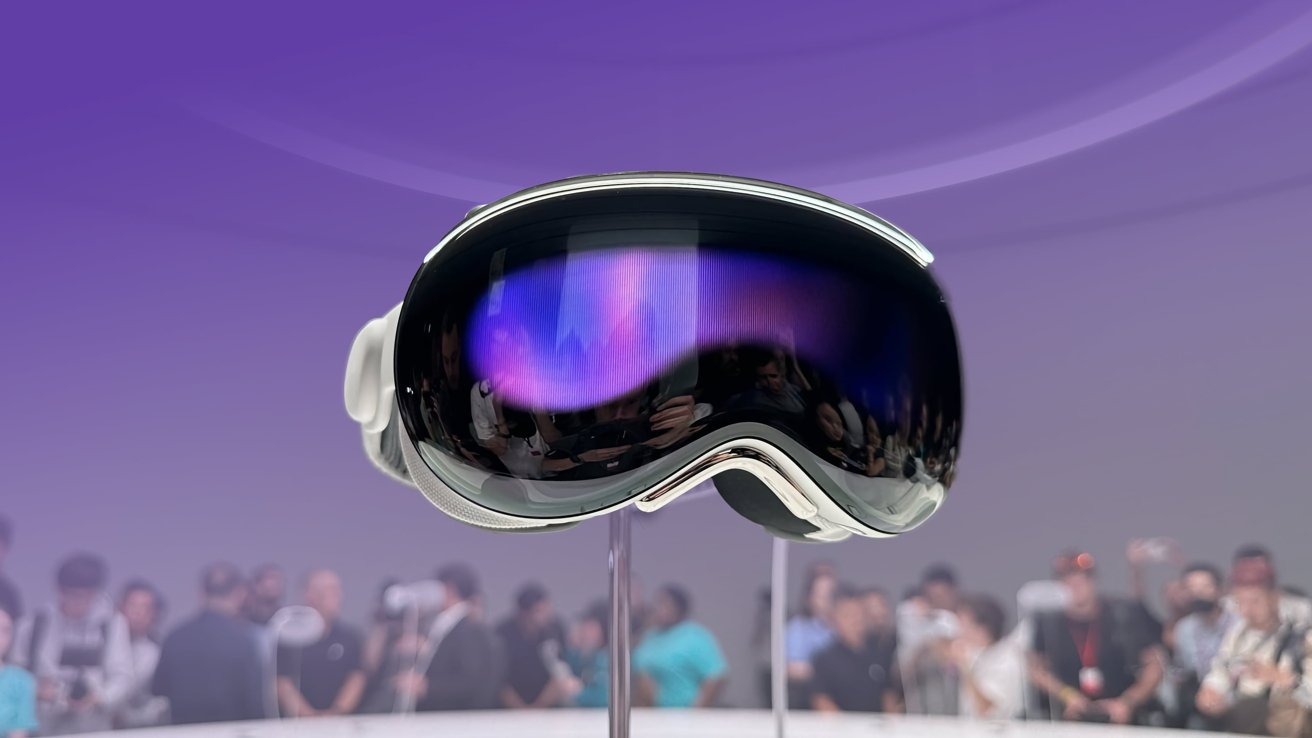
Let’s start where it matters most: the silicon. The original Vision Pro ran on a dual-chip configuration — an M2 paired with an R1 co-processor dedicated to sensor fusion and real-time display processing. It was impressive, but the M2 was already a generation behind by the time the headset launched. For Vision Pro 2, rumors strongly point to an M5 chip, possibly in a similarly paired configuration with a next-generation R-series co-processor.
That’s not just a marketing bump. The M5 family, based on what we know from Apple’s roadmap and analyst reports from Ming-Chi Kuo and Mark Gurman at Bloomberg, is expected to deliver somewhere in the neighborhood of 30–40% better CPU performance and a dramatically improved neural engine — critical for the kind of real-time object recognition and environmental mapping that spatial computing demands. If those numbers hold, Vision Pro 2 would be handling visionOS tasks that currently stutter or lag with a level of smoothness that the platform frankly needs to feel credible as a productivity tool.
“The M5 upgrade isn’t just about raw power — it’s about making spatial computing feel inevitable rather than experimental.” — industry analyst commentary, Q1 2026
The R-series co-processor is equally important. The original R1 achieved an astonishing 12ms photon-to-display latency, which is what made passthrough feel as natural as it did. Any improvement here — even shaving a few milliseconds — could push the experience from impressive to genuinely imperceptible, which is the threshold Apple needs to cross for extended wearability.
Design Overhaul: Lighter, Smarter, and Possibly a New Name
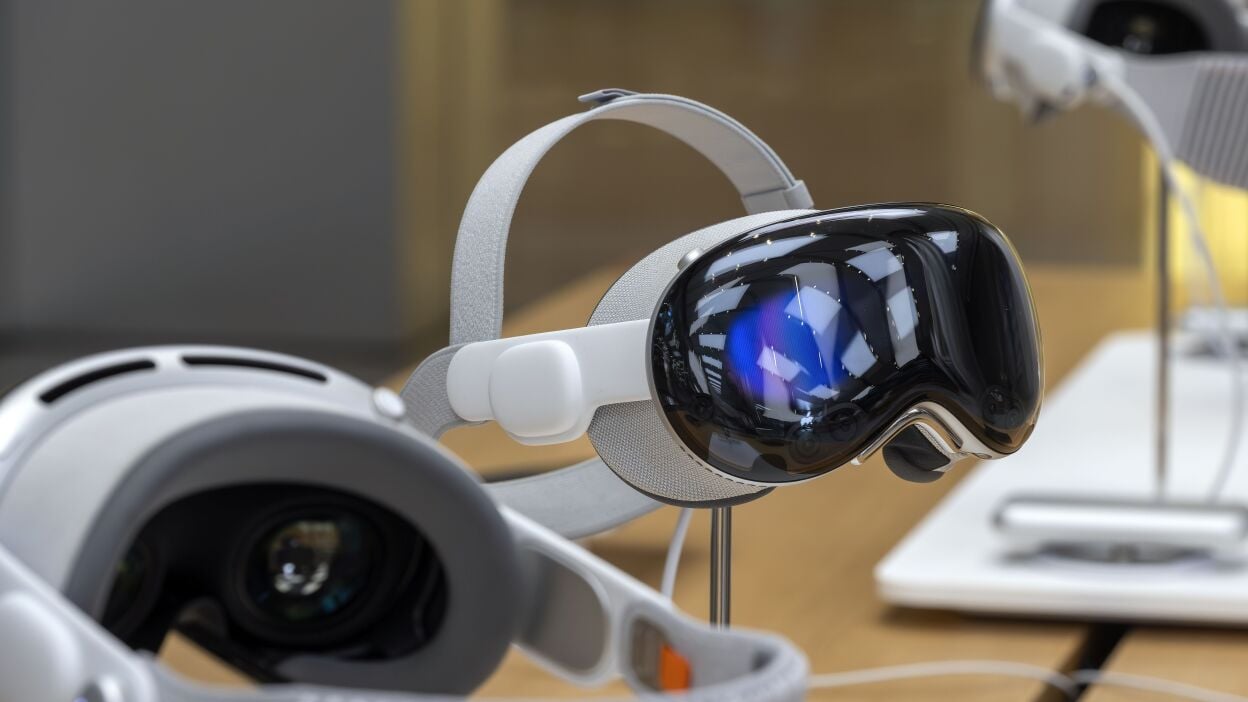
Here’s where things get genuinely interesting. Multiple sources throughout early 2026 have suggested Apple is rethinking the physical design of the headset in meaningful ways. The original Vision Pro weighed in at approximately 600–650 grams depending on the band configuration — heavy enough that Apple’s own documentation recommended against extended sessions. That’s not a great look for a device Apple wants people wearing for hours at a time.
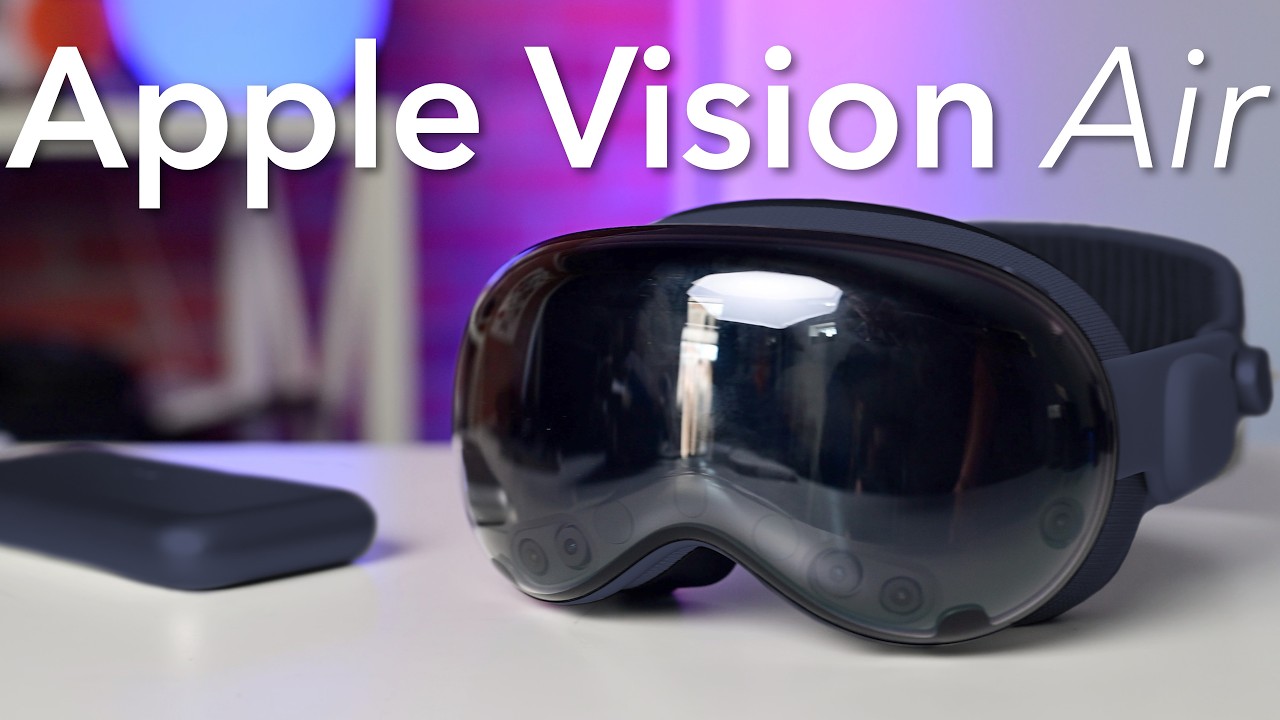
Rumors circulating in early 2026 suggest a target weight reduction of up to 20%, achieved through a combination of lighter optical components, a redesigned battery system, and potentially a new material language that moves away from the aluminum-heavy construction of the original. There’s also been credible chatter — including from the reliable leaker account Majin Bu and corroborated by supply chain sources — about a new colorway, possibly a dark or midnight-adjacent finish that would contrast sharply with the silver-and-glass aesthetic of the first generation.
Perhaps the most surprising rumor is a potential name change. Some sources have floated the possibility that Apple drops the “Vision Pro” branding in favor of something that signals a broader lineup strategy — potentially just “Apple Vision” at the high end, with a separate “Vision” or “Vision Air” tier below it. This would mirror what Apple did with iPad and MacBook, creating a tiered ecosystem rather than a single flagship product. If accurate, it suggests Apple is thinking bigger than a simple hardware refresh.
Display and Optics: Chasing Perfection
The original Vision Pro featured micro-OLED displays with a combined resolution of approximately 23 million pixels — more than a 4K display per eye. It was, by any objective standard, the sharpest display ever put in a consumer headset. So where do you go from there?
According to supply chain reports from The Information and analyst notes from analysts at Jefferies, Apple is exploring a move to next-generation micro-OLED panels with improved brightness — targeting over 5,000 nits peak brightness compared to the original’s already impressive output. This matters enormously for passthrough quality in outdoor or brightly lit environments, one of the consistent criticisms of the first device. There are also rumors of improved eye-tracking hardware, with faster refresh rates on the iris scanning system that powers visionOS’s gaze-based input.
Pancake lens technology, which has been adopted by competitors like Meta in the Quest 3, is reportedly also under serious consideration. Pancake lenses would reduce the overall depth of the optical stack significantly, contributing to that crucial weight and thickness reduction without sacrificing field of view.
Price, Release Window, and the Elephant in the Room
No one expects Apple Vision Pro 2 to be cheap. The question is whether it will be less brutally expensive than its predecessor. Current rumors point to a launch window of early-to-mid 2027, likely at WWDC 2026 as a preview with availability to follow — though some whispers suggest an earlier surprise announcement isn’t off the table.
As for pricing, the optimistic camp believes Apple could bring it in at around $2,999, citing improved manufacturing efficiencies on micro-OLED production and a more mature supply chain. The pessimistic — and arguably more realistic — view puts it at roughly the same $3,499 starting price, with the added weight reduction and chip upgrade positioning it as value-add rather than a price cut. Apple has never been in the business of racing to the bottom, and there’s little evidence that changes here.
- Expected chip: Apple M5 + next-gen R-series co-processor
- Weight target: ~500 grams or below (down from ~620g)
- Display: Next-gen micro-OLED, 5,000+ nits peak brightness
- Estimated price: $2,999–$3,499
- Likely launch window: Late 2026 to early 2027
What’s conspicuously absent from most leaks is any hint of a truly affordable Vision product. Meta’s Quest 3 retails at $499 and has been eating into the mainstream spatial computing conversation, while Apple’s rumored lower-cost “Vision Air” remains frustratingly vague. If Apple wants Vision Pro 2 to matter beyond a niche of wealthy early adopters, it needs a broader strategy — not just a better flagship.
Verdict: A Necessary Evolution, But Is It Enough?
Apple Vision Pro 2 looks like the device the original should have been — lighter, faster, sharper, and more refined. That’s genuinely exciting if you believe spatial computing has a future, and there are strong arguments that it does. The M5 chip upgrade alone could transform visionOS from a showcase platform into something developers and professionals actually build for, which has been the missing link since day one.
But let’s be honest: Apple is playing catch-up in some ways it would never publicly admit. The weight problem, the battery tethering, the limited app ecosystem — these aren’t minor complaints, they’re structural issues that have kept Vision Pro from becoming a cultural moment the way iPhone did. Vision Pro 2 needs to solve problems, not just improve specs.
If the rumors pan out — and Apple’s supply chain leaks have been remarkably accurate in 2025 and 2026 — Vision Pro 2 will be the most capable spatial computer ever made. Whether it’s the most compelling one is a different question entirely, and the answer depends on things no amount of chip performance can fix on its own: software, developer commitment, and a price that doesn’t require a second mortgage. Apple has the hardware story mostly figured out. The rest is still very much a work in progress.