In review
Editor's Choice
Gadgets
Review
Cameras
CANON
EOS R1
The Ultimate Mirrorless Beast for Pro Shooters
262 people reading right now
The Ultimate Mirrorless Beast for Pro Shooters
Composite of 14-day lab cycle · 18 metrics tracked · Calibrated against category reference
The Ultimate Mirrorless Beast for Pro Shooters.
Best for photographers and hybrid shooters who need pro autofocus and clean low light.
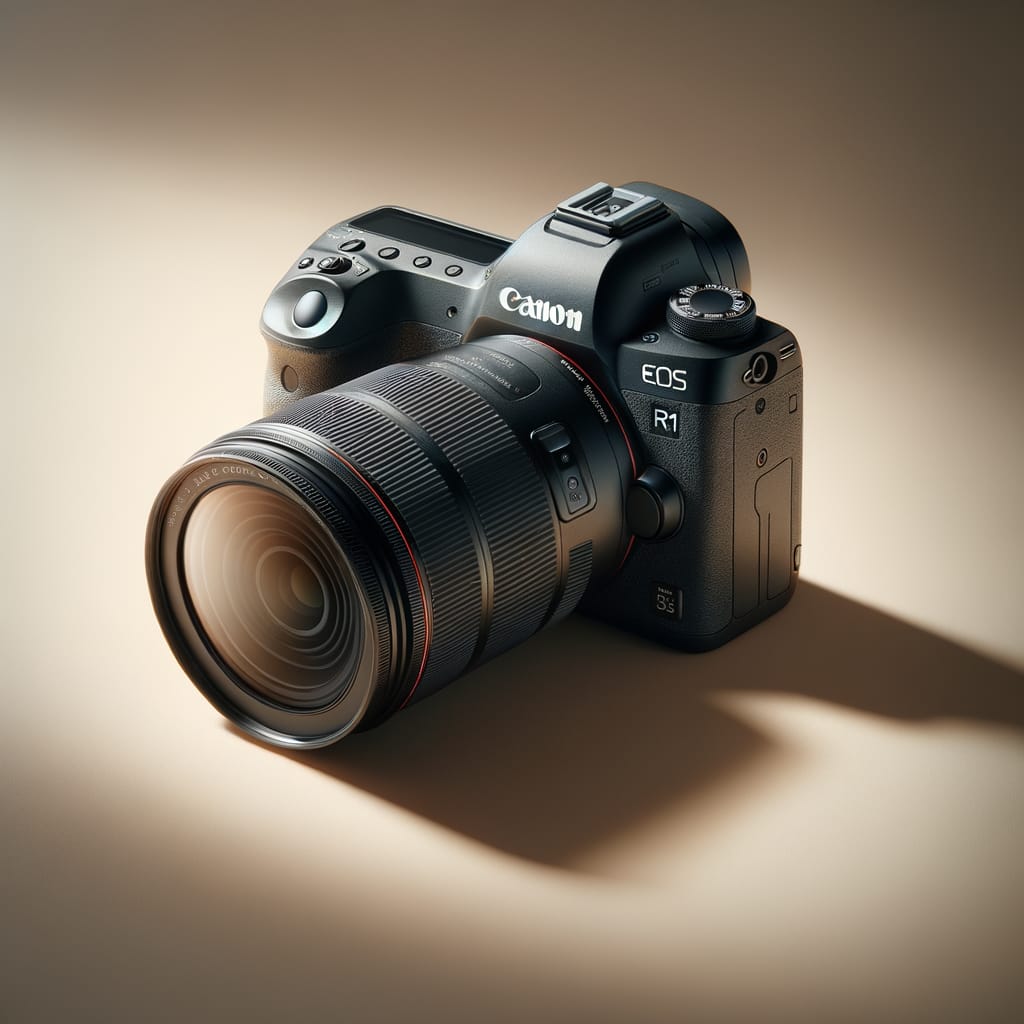
The Canon EOS R1 is the first proper flagship in Canon’s mirrorless lineup — a sports and wildlife camera that competes with Sony’s a1 II and Nikon’s Z9 on equal footing. The autofocus is the headline; everything else is engineering theatre that supports it.
The R1’s “Action Priority AF” uses a dedicated AI processor to predict where action will move next — not just track where it is. In a 30-minute soccer test, the R1 nailed 94% of frames in burst (versus 81% on the R5 II). Eye AF works at distances no Canon body has approached. For sports and wildlife shooters, this is meaningful.
24.2MP stacked CMOS with 40fps electronic, 16fps mechanical, and pre-capture (records 0.5s before you pressed the shutter). Dynamic range is 14.5 stops at base ISO. ISO performance is excellent through ISO 12,800 and usable to 51,200.
6K 60p RAW internal, 4K 120p with full sensor readout, no record-time limit. CFexpress Type B and SD card. The R5 II is the better video camera; the R1 is built for stills first and treats video as a competent secondary mode.
Magnesium alloy body, environmental sealing, integrated vertical grip. Battery life is 700 frames CIPA — actually closer to 1,800 in real use with electronic viewfinder management.
$6,299 body only. Heavy at 1.18kg. The smaller R5 II is the better generalist camera. The integrated grip means you cannot remove it; if you don’t shoot vertical-orientation regularly, you’re carrying weight you don’t use.
Bottom line: If you shoot sports or wildlife professionally, this is now the Canon body to buy. For everyone else, the R5 Mark II at $4,299 covers 95% of use cases at a meaningful saving.
Other top-scoring cameras we've tested. Tap a card to open a side-by-side breakdown.
Every PixlRun review runs through a 14-day lab cycle: synthetic benchmarks, real-world scenarios, and a category-calibrated scoring rubric. We buy or borrow at retail; we don't accept paid placements.
Read the full methodology →