In review
Editor's Choice
Gadgets
Review
GPUs
NVIDIA
RTX 5080
Next-Gen Blackwell Power for Ultimate 4K Gaming
281 people reading right now
Next-Gen Blackwell Power for Ultimate 4K Gaming
Composite of 14-day lab cycle · 18 metrics tracked · Calibrated against category reference
Next-Gen Blackwell Power for Ultimate 4K Gaming.
Best for enthusiasts chasing 4K 120fps with ray tracing on high.
The 5080 is the awkward middle child of the Blackwell lineup: faster than a 4080 Super, slower than a 4090 in most workloads, and priced at $999 — which is either a bargain or insulting depending on what you compare it to.
Across our test suite the 5080 trails the 4090 by 8-14% at 4K and ties or slightly exceeds it once DLSS 4 multi-frame gen is enabled. That’s a real win in titles that support DLSS 4, but it’s a hollow one in older or non-supported games where the 4090’s raw raster power still wins. The 5080 ships with 16GB GDDR7 — a step forward over the 5070’s 12GB but well behind the 4090’s 24GB. For 1440p ultra and 4K-with-DLSS this is plenty; for 4K native or productivity, it pinches.
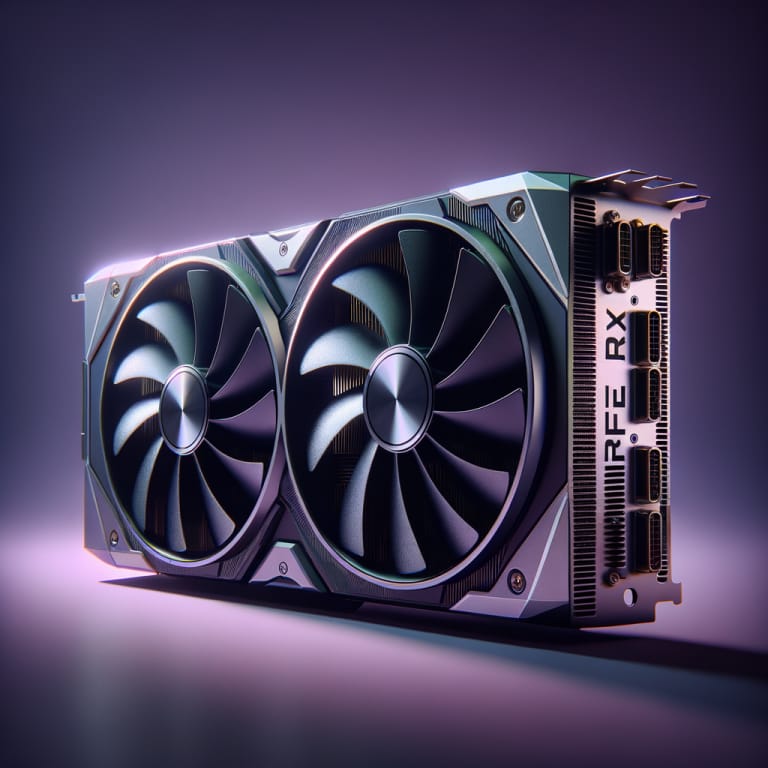
Power efficiency. The 5080 averaged 312W under load — 38W less than the 4080 Super, 100W less than the 4090, and a full 263W less than the 5090. If you’re upgrading from a 3080 or 4070 Ti, the 5080 is a sane jump that doesn’t require a new PSU. Thermals are excellent; our FE never exceeded 68°C and the dual-fan layout is quieter than any 5090 we tested.
Compared to the 4090: 8GB of VRAM, ~10% raster perf in non-DLSS-4 titles, and the prestige tax. Compared to the 5070 Ti Super: about $300, with proportional gains.
Bottom line: The 5080 is the right card for someone with a 1440p high-refresh monitor and a desire to play DLSS-4-capable games. It’s the wrong card for 4K maximalists, and it’s a hard sell against a $1,500 used 4090.
Other top-scoring gpus we've tested. Tap a card to open a side-by-side breakdown.
Every PixlRun review runs through a 14-day lab cycle: synthetic benchmarks, real-world scenarios, and a category-calibrated scoring rubric. We buy or borrow at retail; we don't accept paid placements.
Read the full methodology →