The game development industry is undergoing the most dramatic transformation it has seen since the shift from 2D to 3D — and this time, the catalyst isn’t a new console generation or a breakthrough rendering technique. It’s artificial intelligence. In 2026, AI isn’t just a buzzword slapped onto a press release or a novelty feature buried in a settings menu. It’s fundamentally rewiring how games are conceived, built, tested, and experienced. From indie studios shipping titles with teams of five to AAA publishers managing budgets north of $200 million, the tools have changed, the timelines have compressed, and the excuses for shipping broken, repetitive, or shallow games are running out fast.
The Pipeline Revolution: AI as the New Production Engine
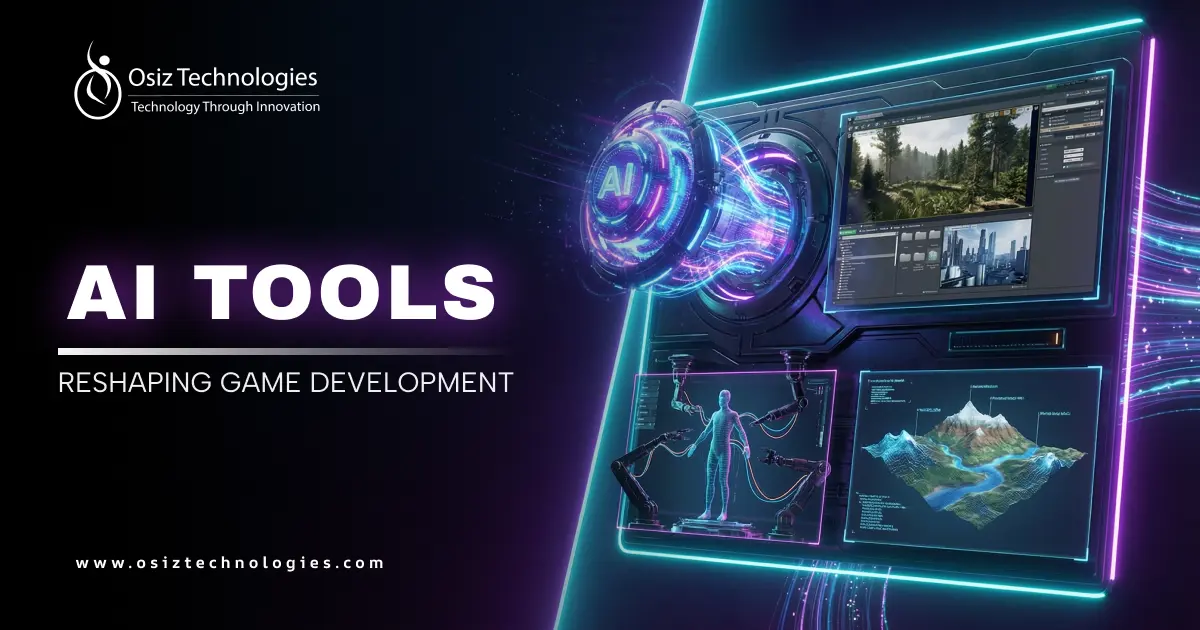
If you asked a senior developer at a mid-sized studio in 2022 how long it took to produce a single high-fidelity character asset, the answer was typically two to four weeks — concept art, modeling, rigging, texturing, and animation passes included. In 2026, that same workflow is being compressed to under 72 hours using tools like NVIDIA’s Omniverse ACE platform, Midjourney’s game-asset pipeline integrations, and bespoke in-house AI engines that studios like Ubisoft and CD Projekt RED have been quietly building since 2023.
This isn’t about replacing artists. The studios getting the most out of these tools are the ones treating AI as a force multiplier rather than a headcount reduction strategy. When a concept artist can generate 40 variant designs in an afternoon and hand-pick the three worth refining, the creative throughput of a single human goes through the roof. That’s a competitive advantage that’s impossible to ignore in a market where development cycles still routinely run five to seven years for flagship titles.
The numbers back this up. According to a 2025 GDC industry survey, 68% of studios with over 50 employees reported using AI-assisted asset generation in at least one phase of production — up from just 19% in 2023. More striking is the indie data: over 80% of solo and micro-studio developers now use some form of AI tooling, primarily because it levels the playing field in ways that raw budget never could.
Procedural Worlds, But Make Them Actually Good
Procedural generation has been around since the days of Rogue in 1980, but let’s be honest — for decades it produced content that felt hollow and repetitive. You knew you were in a generated dungeon. The seams showed. The 2026 iteration of this technology is something categorically different. Modern generative systems trained on curated world-design datasets can now produce environments with semantic coherence — meaning the forests feel like forests, the cities feel inhabited, and the ruins tell a story without a single human hand placing each asset.
Take Exodus by Archetype Entertainment, which shipped in late 2025 with an AI-driven planetary generation system capable of producing over 4,000 unique biomes with distinct flora, atmospheric lighting conditions, and environmental storytelling beats. The team used a custom diffusion-based terrain model running on clusters of NVIDIA H200 GPUs, with inference times averaging 2.3 seconds per biome chunk at 4K texture resolution. That’s not a tech demo — that’s shipping software people paid $70 for, and reviewers largely couldn’t tell which environments were hand-crafted versus generated.
NPC Intelligence: From Scripted Puppets to Reactive Entities
Here’s where the conversation gets genuinely exciting — and a little uncomfortable. Non-player character behavior has been one of gaming’s most persistent embarrassments. We’ve had characters with doctorates in physics walk into walls, quest-givers with photographic memories forget you’ve spoken to them twice, and enemy soldiers with the situational awareness of a traffic cone. In 2026, large language model integration is changing this in real time.
“We’re not scripting dialogue trees anymore. We’re training personalities.” — Lead narrative designer at a major RPG studio, speaking at GDC 2026
Several studios are now embedding lightweight, locally-running language models directly into their game engines. Inworld AI’s runtime SDK, for example, allows NPCs to generate contextually appropriate, persona-consistent dialogue with latency under 80 milliseconds on hardware running an RTX 5080 or equivalent. These characters remember your previous interactions, adapt to your playstyle, and — crucially — don’t break immersion by repeating the same three lines when you walk past them in a tavern.
The implications extend beyond dialogue. AI-driven behavior trees are now capable of real-time tactical adaptation, emotional state modeling, and even emergent social dynamics between NPCs. In Clockwork Dominion, a city-builder RPG hybrid released in Q1 2026, the population of your city operates on a needs-based simulation with over 200 tracked individual variables per citizen, all managed by an on-device neural inference layer that costs roughly 4% of total GPU frame budget on a mid-range setup.
The Indie Democratization Story Nobody Is Telling Loudly Enough
While the AAA conversation dominates headlines, the most transformative story of AI in game development might be happening in bedrooms and co-working spaces. Tools like Unity’s Muse platform, Epic’s Verse AI assistant, and a growing ecosystem of subscription-based game-dev AI suites — most ranging from $30 to $120 per month — have effectively given individual developers access to capabilities that previously required entire departments.
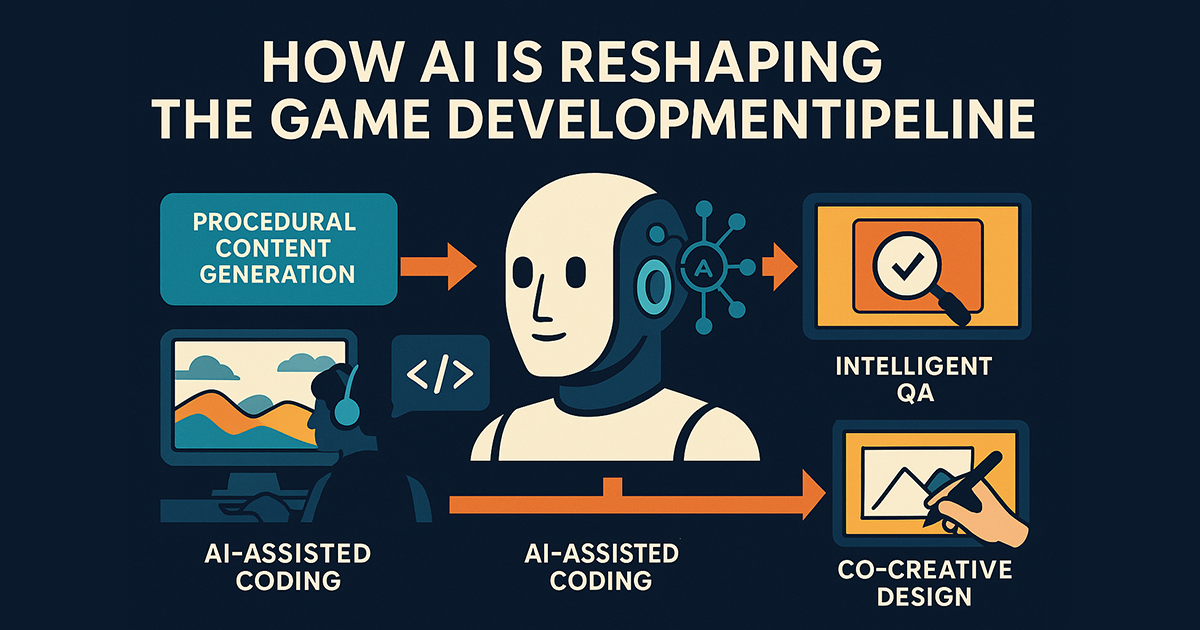
- AI-assisted code generation can now handle boilerplate systems like inventory management, save/load architecture, and UI scaffolding with minimal prompt engineering
- Music and audio generation tools like Suno’s Game Audio tier produce adaptive, looping soundtracks that respond to in-game tension levels dynamically
- QA automation through AI-driven playtesting bots can log thousands of hours of gameplay before a human tester sits down, catching edge cases that would have shipped as day-one bugs in any prior generation
- Localization pipelines powered by fine-tuned translation models are cutting localization costs by up to 60% while maintaining cultural nuance that earlier machine translation destroyed
The result is a wave of high-quality, deeply-polished indie titles that would have been technically impossible for small teams even three years ago. The floor for production quality has risen dramatically, and players — whether they realize it or not — are the beneficiaries.
The Legitimate Concerns You Shouldn’t Dismiss
None of this comes without cost — and not just the subscription fees. The labor displacement conversation is real and ongoing. Concept art studios that once employed 30 people are operating with 10. Junior QA roles have been quietly eliminated across multiple major publishers since 2024. The industry added AI tools faster than it added support structures for the workers those tools displaced, and that’s a failure of leadership that deserves to be said plainly.
There are also pressing questions about creative homogenization. When thousands of developers draw from the same AI models trained on the same datasets, do the games start to look and feel more alike? Early evidence suggests this is a genuine risk for studios that lean on AI as a crutch rather than a collaborator. The games that stand out in 2026 are still the ones with a distinct authorial vision — AI just handles the heavy lifting of executing it.
Copyright and training data ethics remain murky territory. Several ongoing legal disputes involving generative art models and unlicensed training data are still unresolved as of this writing, and studios are right to be cautious about their legal exposure when using third-party generation tools in commercial products.
Verdict: The Genie Is Out of the Bottle — Use It Wisely
AI isn’t coming to game development. It’s already there, it’s already producing results, and the studios pretending otherwise are falling behind in ways that will be visible in their release quality within the next 18 months. The technology has matured past the proof-of-concept phase and landed firmly in production reality.
The question now isn’t whether developers should use AI tools — it’s how thoughtfully they choose to use them. The studios winning in 2026 are treating AI as a skilled collaborator with specific strengths, not an oracle or a replacement for human creativity. The results, when done right, are genuinely extraordinary: richer worlds, more believable characters, faster production cycles, and a democratized landscape where a determined solo developer can produce work that competes with teams ten times their size.
That’s not hype. That’s the current state of the industry — and if anything, we’re still in the early innings. The next five years are going to be the most interesting in the history of this medium.