The console wars have never been more interesting — or more complicated. With Sony’s PS5 Pro now firmly embedded in the mid-generation landscape and Microsoft’s Xbox Series X still holding its ground as one of the most technically capable boxes ever shipped, 2026 has become the year where both platforms are finally being pushed to their absolute limits. We’ve spent months with both machines, running benchmarks, testing exclusives, and living with each ecosystem day-to-day. The result? A genuinely difficult comparison between two consoles that are great in completely different ways — and one that ultimately comes down to what you value most in your gaming life.
Raw Power: The Numbers That Actually Matter
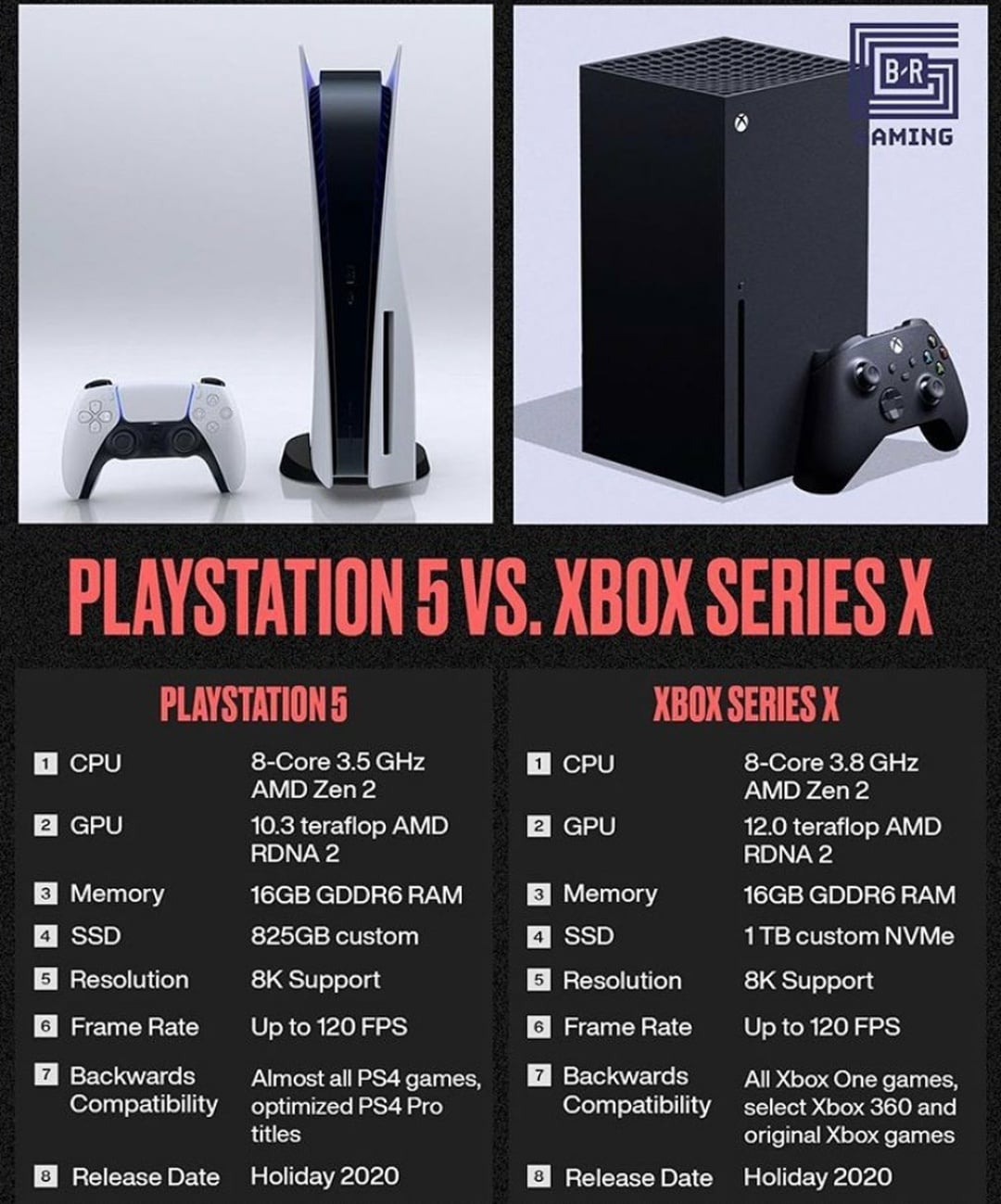
Let’s start where every hardware conversation should — the silicon. The Xbox Series X launched in 2020 with a 12 teraflop GPU, 16GB of GDDR6 RAM, and a custom AMD RDNA 2-based architecture that still impresses four years later. On paper, it was always the more powerful machine compared to the standard PS5’s 10.28 teraflops.
Then Sony dropped the PS5 Pro in late 2024 and scrambled everything. The Pro packs a significantly upgraded GPU built on an RDNA 3-adjacent architecture delivering approximately 33.5 teraflops of GPU compute — nearly triple the original PS5 and a substantial leap over the Series X. Paired with Sony’s proprietary PlayStation Spectral Super Resolution (PSSR) upscaling tech, the result is a machine that renders games at lower native resolutions but outputs imagery that frequently rivals or surpasses native 4K. It’s the AMD FSR versus DLSS debate all over again, and Sony’s implementation is genuinely impressive.
CPU performance is closer than you’d expect. Both consoles run custom AMD Zen 2 processors clocked at similar speeds, meaning gameplay logic, AI, and open-world simulation remain relatively comparable. Where the PS5 Pro truly separates itself is in sustained GPU workloads and ray tracing performance — areas where the extra compute units make a measurable, visible difference.
Real-World Performance: Benchmarks in the Field
Synthetic specs only go so far. What we care about is how these machines actually perform in the games people play every day in 2026.
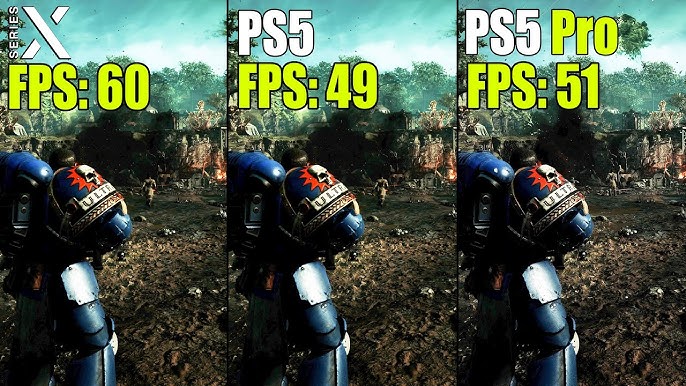
Take Space Marine 2 as a case study — one of the most technically demanding multiplatform releases of the past year. On the Xbox Series X in Performance Mode, the game delivers a mostly stable 60fps at a dynamic 1440p-equivalent resolution. On the PS5 Pro using PSSR, it runs at a reconstructed 4K output that looks noticeably sharper, with more consistent frame delivery and better shadow detail in the cathedral sequences that hammer lesser hardware. The difference isn’t subtle. It’s the kind of thing you notice without pixel-peeping.
In titles like Final Fantasy VII Rebirth Part 2 and the recently released Ghost of Tsushima: Legends Expanded Edition, the PS5 Pro’s advantage becomes even more pronounced. Ray-traced reflections that chug on the standard PS5 run smoothly on the Pro, and the Xbox Series X — while no slouch — can’t match the reconstructed image quality at equivalent performance targets.
“The PS5 Pro doesn’t just outpace the Series X in raw teraflops — it changes the conversation about what mid-gen upgrades can actually deliver.”
That said, the Series X has a meaningful advantage in one key area: backward compatibility. Microsoft’s commitment to running Xbox One, 360, and original Xbox titles with Auto HDR and improved performance remains unmatched. If your library spans multiple generations of Xbox software, the Series X is simply the better machine for honoring that investment.
Ecosystem and Exclusives: Where It Gets Philosophical
Hardware specs are only half the story. The other half is the software ecosystem surrounding each platform — and here is where the two consoles diverge most dramatically.
Sony has continued its relentless exclusive strategy in 2026. Horizon Zero Dawn Reforged, the upcoming Wolverine from Insomniac Games, and God of War: Ragnarök’s newly released story expansion have kept PlayStation players firmly planted on their couches. These aren’t just good games — they’re system sellers, built from the ground up to exploit PS5 Pro hardware and DualSense haptics in ways that genuinely change how games feel moment-to-moment.
Microsoft’s approach has fundamentally shifted. With Xbox Game Pass Ultimate now bundling cloud gaming, PC, and console access for $19.99/month in 2026, the value proposition is undeniable. But the cost of that broad strategy has been exclusivity. Nearly every major Xbox first-party title — Avowed, Indiana Jones and the Great Circle, Fable — launched simultaneously on PC, diluting the reason to own a Series X specifically. Xbox is increasingly a service, not a destination.
Price, Value, and the Uncomfortable Conversation
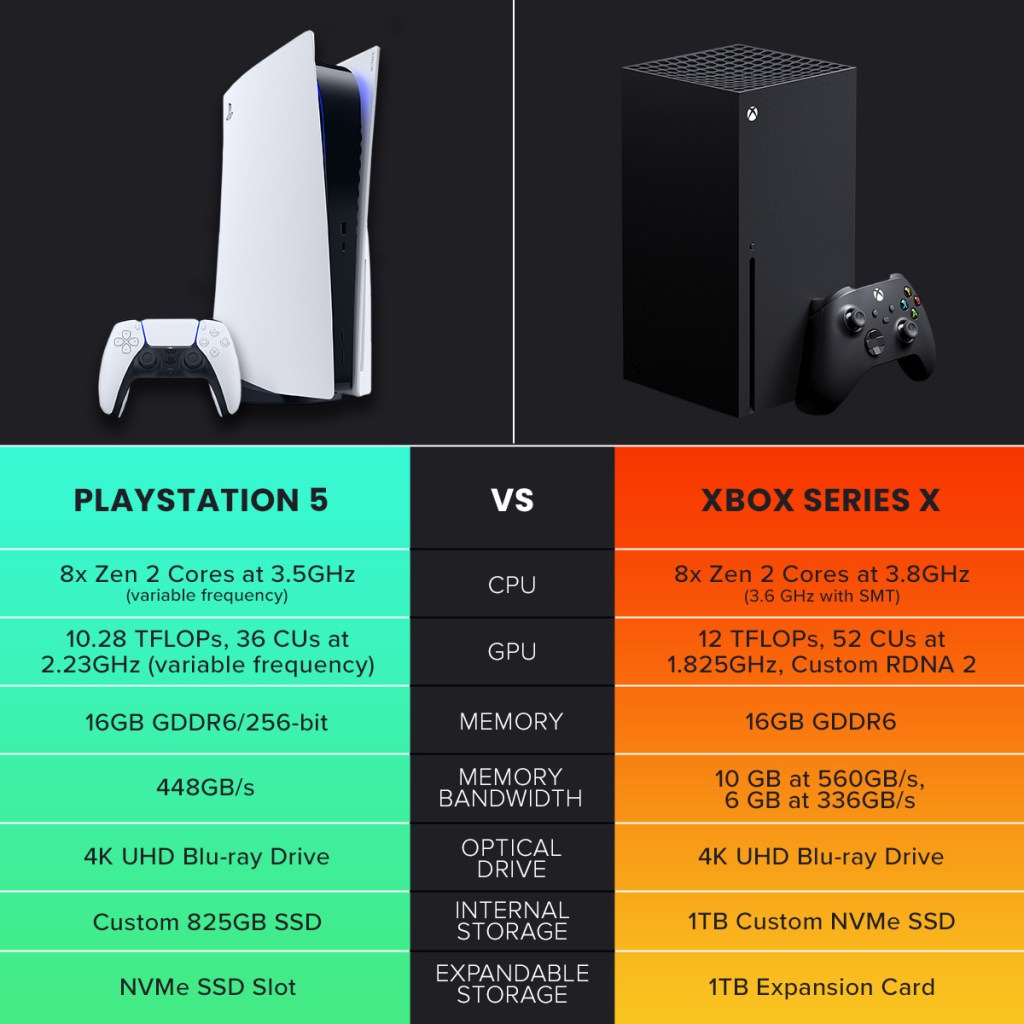
Let’s talk money — because this comparison would be dishonest without it. The Xbox Series X has settled at $499, often available with Game Pass bundles that make the entry price even more palatable. When you factor in Game Pass’s library of hundreds of titles included at no additional cost, the Series X delivers extraordinary value for players who haven’t built a library.
The PS5 Pro launched at $699.99 — without a disc drive, which Sony sells separately — and that price point remains controversial. For the performance jump it delivers, it’s arguably justified. But for a player new to PlayStation, dropping $700 on a console before buying a single game is a significant ask. Sony has made no concessions here, and their confidence in the product’s quality is either admirable or tone-deaf depending on your budget.
- PS5 Pro: $699.99 (digital only), ~33.5 TFLOPS GPU, PSSR upscaling, 2TB SSD
- Xbox Series X: $499, 12 TFLOPS GPU, DirectML upscaling, 1TB NVMe SSD
- Game Pass Ultimate: $19.99/month — the Xbox’s greatest weapon
- PlayStation Plus Premium: $17.99/month — solid, but a narrower library
Storage is another point of contention. The PS5 Pro ships with 2TB of internal SSD, which is a genuine quality-of-life improvement over the Series X’s 1TB. Expansion on both platforms remains expensive, with proprietary cards running well above standard M.2 pricing.
Verdict: Two Champions, Two Philosophies
After everything — the benchmarks, the game libraries, the ecosystem deep-dives — here’s the honest truth: the PS5 Pro is the more powerful, more future-proof piece of gaming hardware available in 2026. If raw performance, exclusive software quality, and the tactile innovation of the DualSense controller matter most to you, Sony’s mid-gen refresh is the easy recommendation. It’s the console for people who want the absolute best version of a game, full stop.
But the Xbox Series X is the smarter purchase for a different kind of gamer. If you’re price-conscious, deeply embedded in the Microsoft ecosystem, or primarily game on both PC and console, the Series X paired with Game Pass Ultimate offers a breadth of value that Sony genuinely cannot match. It’s a machine that respects your wallet and your time simultaneously.
What’s fascinating about 2026 is that both companies have doubled down on their core identities rather than converging. Sony makes hardware temples to gaming excellence. Microsoft builds flexible platforms for gaming everywhere. Neither is wrong — they’re just answering different questions.
Buy the PS5 Pro if performance, exclusives, and immersion are your north star. Buy the Xbox Series X if value, flexibility, and breadth define your ideal gaming life. Either way, you’re not making a mistake — you’re just choosing your philosophy.