NVIDIA’s GPU releases used to feel like annual celebrations — each new card arriving with a predictable performance bump and a price tag that made enthusiasts wince but ultimately open their wallets. Then came the RTX 5090. Launched in early 2025 and now battle-tested through a full year of real-world use in 2026, it’s either the greatest consumer GPU ever made or the most expensive proof that diminishing returns are very, very real. At $1,999 MSRP — double the already-painful RTX 4090 launch price of $1,599 — the 5090 demands more than just performance. It demands justification. So let’s give it one, or at least try.
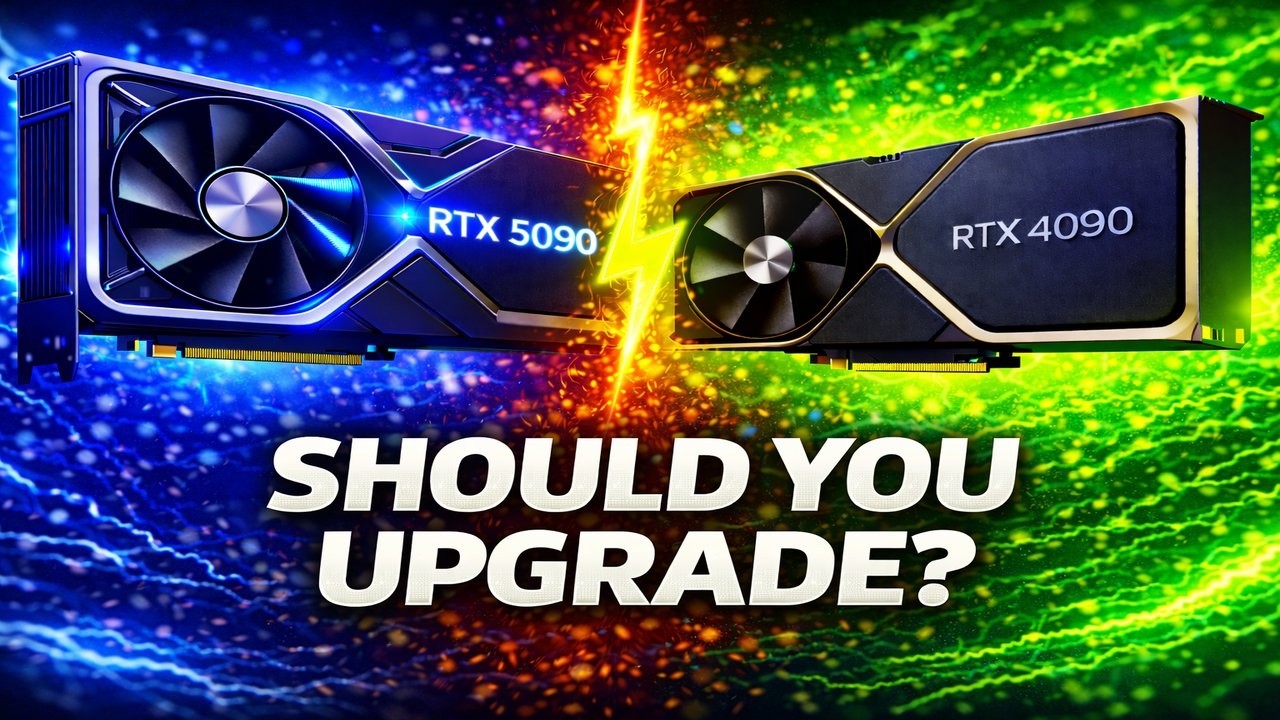
The Spec Sheet War: GB202 vs AD102
Numbers first, opinions later. The RTX 5090 is built on NVIDIA’s Blackwell architecture, featuring the GB202 die with a monstrous 21,760 CUDA cores — a substantial leap over the RTX 4090’s already-formidable 16,384 CUDA cores on the Ada Lovelace AD102 die. Memory tells an even more dramatic story: the 5090 ships with 32GB of GDDR7 running across a 512-bit bus, delivering a jaw-dropping 1,792 GB/s of bandwidth. The 4090, by comparison, offers 24GB of GDDR6X at 1,008 GB/s. That’s not an upgrade — that’s a generational redefinition of what memory bandwidth even means on a consumer card.
Clock speeds on the 5090 boost to 2,900 MHz, and the card carries a TDP of 575W, which is the number that should make anyone pause. The 4090 was already considered power-hungry at 450W, and the 5090 pushes well beyond that. If you’re not running a high-end PSU — think 1,000W or above — and excellent case airflow, you’re not getting the most out of this card. NVIDIA’s new 16-pin connector has improved reliability over the early adapter drama that plagued the 4090’s launch days, but thermals remain a genuine engineering conversation.
Gaming Performance: Where the Numbers Get Interesting
In pure rasterization — the kind of rendering that drives most AAA titles — the RTX 5090 leads the 4090 by approximately 35-45% depending on resolution and game engine. At 4K with ray tracing disabled, titles like Cyberpunk 2077 Phantom Liberty, Alan Wake 2, and Black Myth: Wukong show the 5090 averaging around 180-200 fps versus the 4090’s still-excellent 130-145 fps. Impressive? Absolutely. But here’s the uncomfortable truth: the RTX 4090 was already overkill for most 4K gaming scenarios in 2024, and in 2026, it’s still overkill.
The RTX 4090 delivers a gaming experience that is, by every measurable standard, more than enough for even the most demanding 4K titles at maximum settings. The question was never whether the 5090 is faster — it obviously is. The question is whether that speed matters to you.
Where the 5090 genuinely separates itself is in DLSS 4 with Multi Frame Generation — NVIDIA’s AI-powered rendering technology that can generate multiple frames between rendered frames. With MFG active, the 5090 can push well over 300 fps in 4K in supported titles, creating a silky responsiveness that has to be experienced on a high-refresh-rate display to be believed. Paired with a 240Hz or 360Hz monitor, the difference becomes visceral. The 4090 supports DLSS 3 Frame Generation, but the latency characteristics and frame quality of DLSS 4 on Blackwell are genuinely superior — and that’s not marketing copy, that’s months of community testing confirming it.
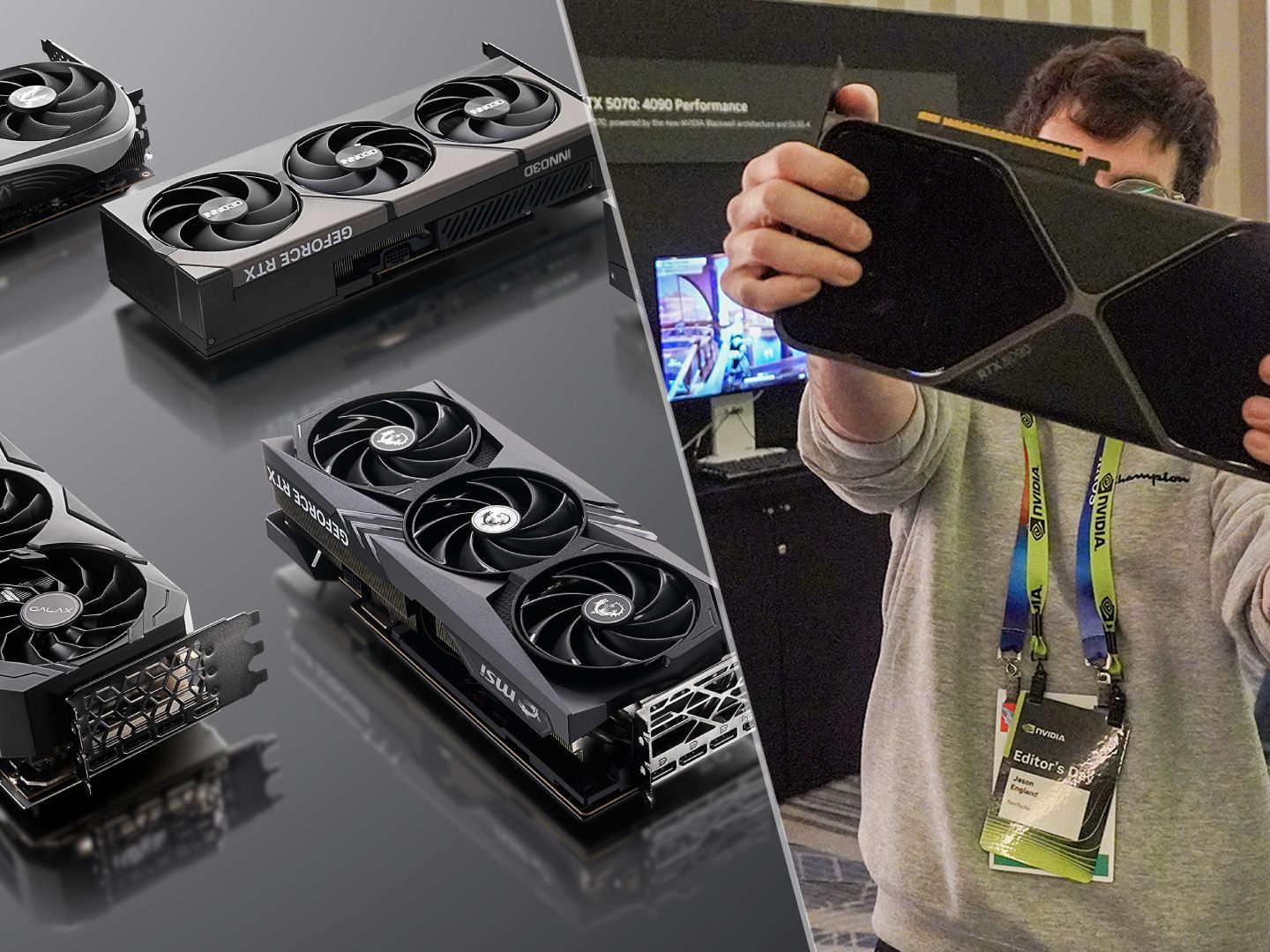
Creative and AI Workloads: The 5090’s Real Arena
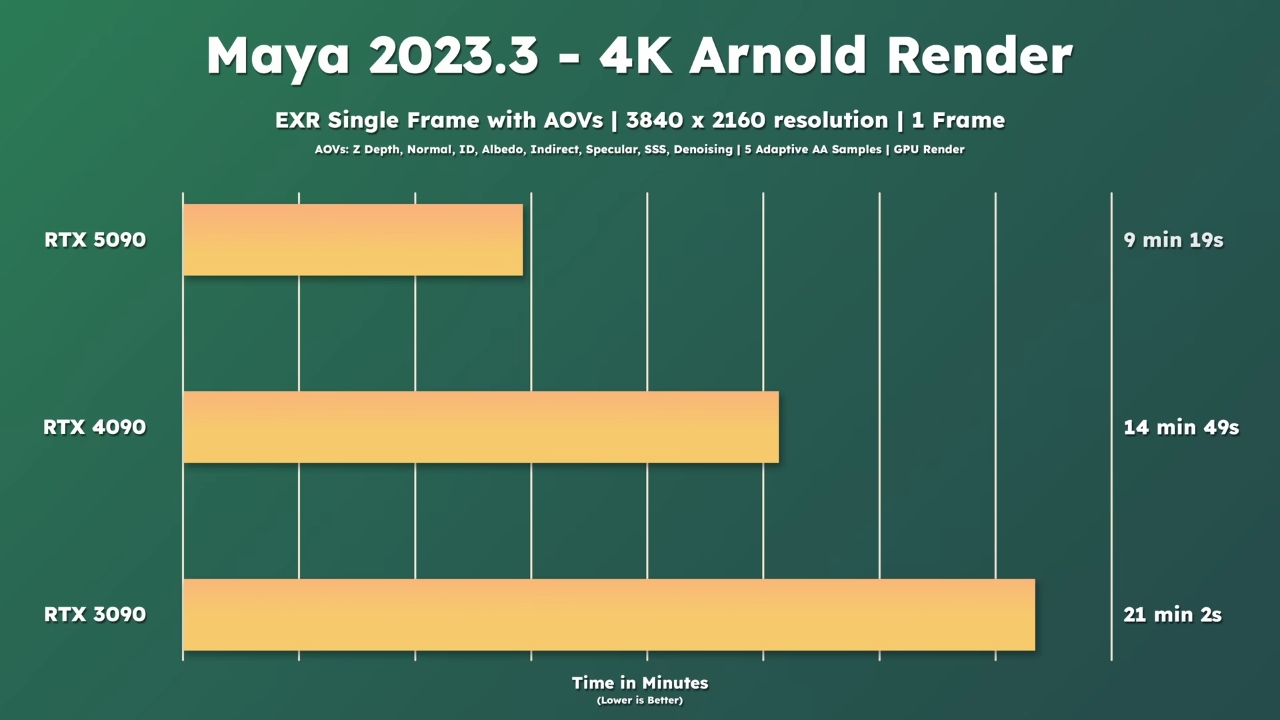
If gaming is where the upgrade argument gets complicated, creative and AI workloads are where it becomes genuinely compelling. The RTX 5090’s combination of 32GB VRAM, Blackwell Tensor Cores, and fifth-generation RT cores makes it an entirely different class of tool for professionals running local AI inference, 3D rendering, or video production.
In Blender Cycles rendering benchmarks, the 5090 completes complex scenes in roughly 55-60% of the time it takes the 4090. For studios and freelancers billing by the hour, that’s not a luxury — that’s money. Local large language model inference with quantized models up to 70B parameters becomes genuinely practical with 32GB of GDDR7. The 4090’s 24GB was already pushing the limits of what models like LLaMA 3 could comfortably load in 2025, and the 2026 landscape of local AI tools has only grown more VRAM-hungry. In DaVinci Resolve with 8K RAW timelines, the 5090’s bandwidth advantage translates to near-instant scrubbing where the 4090 would occasionally stutter.
- Blender Cycles (BMW benchmark): 5090 ~38 seconds vs 4090 ~67 seconds
- Stable Diffusion XL (512 images batch): 5090 ~4.2 minutes vs 4090 ~7.8 minutes
- DaVinci Resolve 8K export: 5090 ~18% faster render times on average
- Unreal Engine 5 Lumen scenes: 5090 delivers 40+ fps where 4090 dips to 28-32 fps
These are the benchmarks that actually justify the price premium — if your workflow touches any of them regularly.
The Price Reality Check in 2026
Here’s where emotion meets economics. By mid-2026, the RTX 4090 can regularly be found on the second-hand market for $800-$1,100, depending on condition and cooler configuration. The RTX 5090, meanwhile, has settled at MSRP in most markets after the supply-constrained launch chaos of early 2025, but third-party AIB cards from ASUS ROG, MSI, and Gigabyte regularly push the real-world price to $2,100-$2,400. That delta is enormous.
If you’re currently running an RTX 3080 or older, and you’re eyeing a 5090, the jump is absolutely worth considering — especially if your work includes creative applications. But if you already own a 4090? The honest answer, delivered without any sugarcoating, is that upgrading is a flex, not a necessity. Performance-per-dollar, the metric that matters most to anyone not running a hedge fund, strongly favors the 4090 in 2026. A used 4090 bought today for $900 and paired with a capable CPU and fast NVMe storage will be an elite gaming machine through the end of this decade for most use cases.
Verdict: Know Your Use Case Before You Open Your Wallet
The RTX 5090 is, without question, the fastest consumer GPU NVIDIA has ever built. It’s an engineering achievement — 575W of precision silicon that delivers frame rates and compute performance that felt impossible just a few years ago. Blackwell’s improvements to DLSS 4, RT performance, and Tensor Core efficiency are real, measurable, and in the right scenarios, transformative.
But “best” and “worth it” are different questions entirely. For professional creators — 3D artists, AI researchers, video producers working with high-resolution footage — the 5090 pays dividends. Time saved on renders, expanded VRAM headroom for growing AI workloads, and the raw throughput advantage make it a defensible business purchase. For those people, upgrade without guilt.
For pure gamers? Even the most demanding among you are buying headroom that the game industry will take several more years to actually utilize. The RTX 4090 remains a generational GPU in 2026, and buying one used at current market prices might be the smartest GPU purchase available right now. The 5090 is magnificent. It’s also, for most people, magnificently unnecessary.
The upgrade is worth it if you know exactly why you need it. If you’re still figuring that out — keep your money.