For years, cloud gaming has been the industry’s favorite “almost there” technology — perpetually promising to liberate players from expensive hardware while perpetually underdelivering on that promise. Google Stadia arrived with stadium-sized ambitions and exited quietly in 2023, leaving a trail of skepticism in its wake. But something has genuinely shifted in 2025 and into 2026. The infrastructure is maturing, the latency numbers are finally getting respectable, and the big players are betting billions that this time it’s different. The question isn’t whether cloud gaming can work anymore — it’s whether it works well enough to matter.
The Numbers Don’t Lie: A Market in Hyperdrive
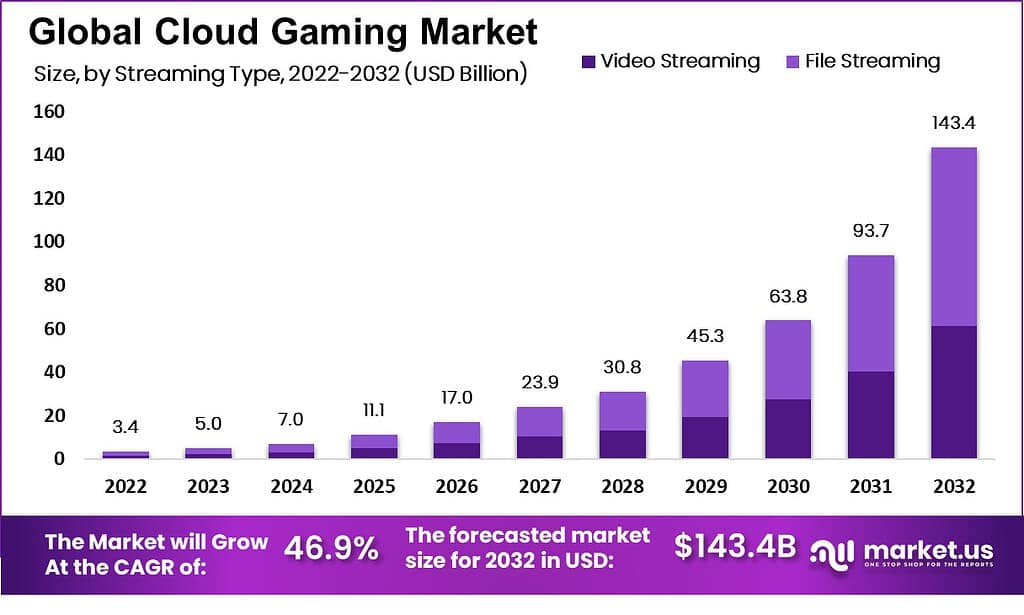
Let’s start with the cold, hard data, because the market trajectory here is genuinely staggering. Cloud gaming is currently expanding at a compound annual growth rate of 46.9%, with the global market projected to surpass $90 billion by 2030. That’s not speculative froth — that’s institutional money following user behavior. In 2025 alone, NVIDIA GeForce NOW crossed 30 million registered users, while Xbox Cloud Gaming reported over 20 million monthly active players streamed through Game Pass Ultimate. These aren’t rounding errors. These are platform-scale numbers.
The underlying driver is hardware fatigue. A PlayStation 5 Pro still retails at $699. Building a capable gaming PC in 2026 — one that can push 1440p at 120fps with ray tracing enabled — will run you comfortably past $1,200 once you factor in a decent GPU like the RTX 5070 or RX 9700 XT. Cloud gaming sidesteps that entirely. For $19.99 a month with Xbox Game Pass Ultimate, you’re theoretically streaming titles running on server-side hardware that would cost thousands to replicate at home.
The keyword there is “theoretically.” Because the gap between what cloud gaming promises on a spec sheet and what it delivers in your living room is still very much a conversation worth having.
What Stadia Got Wrong — And What Came Next
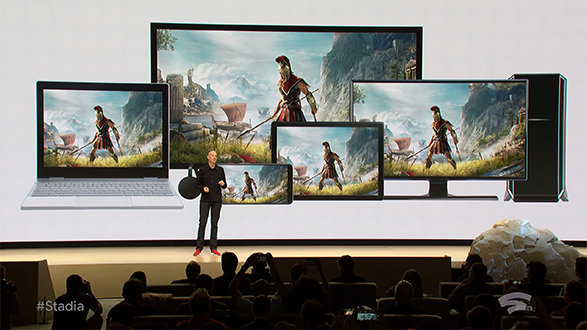
Before we get too optimistic, it’s worth understanding why the road to cloud gaming has been littered with casualties. Google Stadia is the most prominent ghost, but it wasn’t alone. PlayStation Now limped along for years before being absorbed into the PlayStation Plus ecosystem. Amazon Luna launched with quiet fanfare and has spent most of its existence trying to find an identity. The pattern is consistent: the technology wasn’t the problem — the ecosystem was.
“Stadia failed not because streaming games is impossible, but because Google couldn’t convince developers or players that the platform had a future. The chicken-and-egg problem ate it alive.”
The services that have survived — and genuinely thrived — are the ones anchored to existing, trusted ecosystems. Xbox Cloud Gaming works because it’s a feature of Game Pass, not a standalone gamble. GeForce NOW works because it streams games you already own on Steam. The lesson the industry took from Stadia’s collapse is that cloud gaming cannot be a destination. It has to be an extension of somewhere players already live.
In 2026, that philosophy is paying dividends. Microsoft’s Azure-backed cloud gaming infrastructure now spans over 50 global regions, dramatically shrinking the geographic latency lottery that plagued early adopters. NVIDIA’s GeForce NOW Ultimate tier streams at up to 4K/120fps with RTX 4080-class GPU performance — numbers that were unthinkable for a streaming service just three years ago.
The Latency Problem: Solved, or Just Managed?
Here’s where the honest conversation gets uncomfortable. Latency remains cloud gaming’s original sin, and while it has improved dramatically, it hasn’t been eliminated. The physics of the problem don’t change: data has to travel from your controller, to a server potentially hundreds of miles away, get processed, rendered, and streamed back to your display. Even at the speed of light, that round trip has a floor.
In practical terms, here’s what the benchmarks look like in 2026:
- Xbox Cloud Gaming (Edge browser, 5GHz Wi-Fi): Average input latency of 60–80ms in optimal conditions
- GeForce NOW Ultimate (wired Ethernet, nearest data center): 30–45ms end-to-end latency regularly achievable
- PlayStation Cloud Streaming (PS5 Remote Play infrastructure): 50–70ms on a strong home connection
- Local gaming on RTX 5080 at 1440p/144Hz: Sub-5ms input latency baseline
The gap is real. For turn-based RPGs, walking simulators, strategy titles, or narrative adventures, that 60ms ceiling is genuinely imperceptible. For a competitive first-person shooter where the margin between winning and losing is measured in frames, it absolutely matters. Cloud gaming in 2026 is excellent for 70% of gaming use cases. That remaining 30% — fast-twitch competitive gaming — remains hardware’s fortress.
The 2026 Landscape: Who’s Winning and Why
The competitive picture has clarified considerably. Three players have meaningfully separated themselves from the pack, and each is winning for different reasons.
NVIDIA GeForce NOW Ultimate
At $19.99 per month, GeForce NOW Ultimate is arguably the most technically impressive cloud gaming product on the market right now. The RTX 4080-class servers deliver genuine ray tracing, DLSS 4 with Frame Generation, and consistent 4K output. Crucially, NVIDIA lets you stream your existing Steam and Epic library rather than locking you into a proprietary store. The library gap that hampered early cloud services essentially doesn’t exist here.
Xbox Cloud Gaming
Microsoft’s approach is strategically brilliant: bundle it with Game Pass and let it be the path-of-least-resistance for casual players. The Logitech G Cloud and ROG Ally running Xbox Cloud Gaming have introduced streaming to audiences who might never have considered it. Microsoft has also been aggressive about day-one cloud availability for first-party titles — Indiana Jones and the Great Circle launched simultaneously on hardware and cloud, a signal of where their priorities lie.
PlayStation Streaming
Sony’s entry is the most interesting wildcard of 2026. After years of treating PS Now as an afterthought, PlayStation has invested heavily in cloud infrastructure to support PS5 titles streaming on PS4 hardware — effectively extending the PS5’s audience without requiring hardware upgrades. It’s a defensive play, but a smart one.
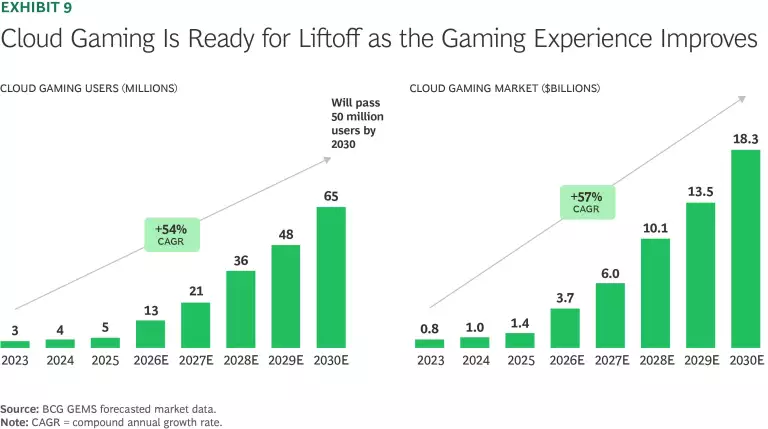
BCG’s 2026 Video Gaming Report reinforces this competitive picture, noting that platform stickiness and content exclusivity — not raw streaming quality — will determine which services build lasting user bases. The technical floor has risen enough that differentiation now happens at the ecosystem layer.
Verdict: Ready — With Asterisks
So is cloud gaming finally ready? The honest answer is yes, conditionally — and those conditions matter less than they used to.
If you have a reliable broadband connection above 35Mbps, live within reasonable proximity of a major data center, and your gaming habits lean toward anything outside of competitive shooters or fighting games, cloud gaming in 2026 is a genuinely compelling proposition. The image quality is good. The library access is better than it’s ever been. The pricing makes hardware ownership look like an increasingly hard sell for casual and mid-tier players.
But let’s not overcorrect into breathless hype. Local hardware still wins on latency, wins on reliability, and wins on the zero-dependency satisfaction of pressing power and just playing. For hardcore gamers, for competitive players, for people in rural areas with spotty internet infrastructure — cloud gaming remains a supplement, not a replacement.
What’s changed is that the supplement is now good enough to be someone’s primary gaming experience, and a growing number of people are choosing exactly that. The market data, the user numbers, and the infrastructure investments all point in the same direction. Cloud gaming has graduated from “ambitious experiment” to “legitimate platform.” Whether it graduates further into “dominant paradigm” depends on factors — 6G rollout timelines, data center expansion, regulatory broadband requirements — that will play out over the next five years.
For now? Get off the fence. Try it. You might be surprised how good “almost there” has gotten.