Microsoft is done playing catch-up. After a generation where the Xbox Series X earned universal praise for its raw horsepower but struggled to close the gap with PlayStation 5 in the living room wars, the company is swinging big with its next console — currently codenamed Xbox Series Z. Slated for a Holiday 2027 launch, this machine isn’t just an incremental spec bump. If the leaks, insider reports, and official breadcrumbs Microsoft has been scattering across the internet are anything to go by, the Series Z represents a fundamental rethinking of what a home console can be in a world where the cloud, AI, and streaming have permanently reshaped how we play. And yes — it sounds genuinely exciting.
The gaming landscape heading into 2027 looks radically different from 2020. The PlayStation 5 Pro, released in late 2024, set a new performance benchmark at $699, while Nintendo’s Switch 2 — launching in mid-2025 — proved that there’s still enormous appetite for hybrid, portable-first experiences. Meanwhile, PC gaming has fragmented into a sprawling ecosystem of handhelds, from the Steam Deck OLED to Lenovo’s Legion Go 2, all fighting for the same living room and bedroom real estate that consoles once owned exclusively. Microsoft knows this. The Xbox Series Z isn’t being designed in a vacuum — it’s being designed as a direct response to a market that no longer accepts “good enough.”
Sources close to Microsoft’s hardware division, including reporting from Windows Central and corroborated by supply chain analyst Jeff Grubb, suggest the project entered final silicon validation in early 2026, with manufacturing ramp-up scheduled to begin Q2 2027. That timeline puts a November 2027 release date firmly in reach — and possibly a reveal at a revived Xbox showcase as early as June 2027.
Hardware Specs: A Generational Leap That’s Hard to Argue With
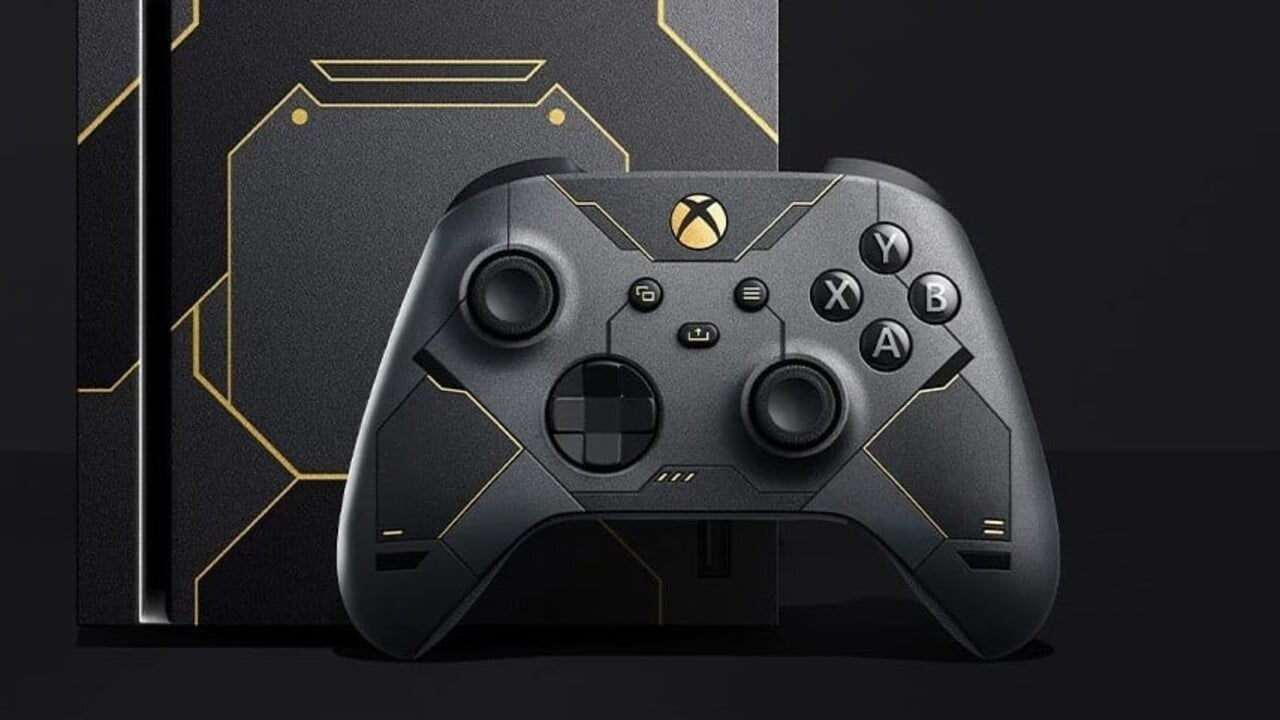
Let’s talk numbers, because with the Series Z, the numbers are genuinely staggering. According to multiple hardware leaks verified by Digital Foundry‘s sources and a now-deleted regulatory filing spotted by VGC in February 2026, the Series Z is built around a custom AMD APU manufactured on TSMC’s 3nm process node — a full generation ahead of the 6nm silicon inside the Series X. The GPU component is projected to deliver approximately 24 teraflops of rasterization performance, with dedicated hardware acceleration for ray tracing that Microsoft internally benchmarks at roughly 3x the throughput of the Series X’s RT capabilities.
On the memory side, expect 24GB of GDDR7 unified memory, up from the 16GB GDDR6 configuration in the current generation, paired with a memory bandwidth figure rumored to exceed 900 GB/s. The custom NVMe SSD has been clocked in internal documents at 10 GB/s sustained read speeds — nearly double the 2.4 GB/s of the Series X — which should make the already-impressive DirectStorage load times feel practically instantaneous. For context, that SSD bandwidth rivals and slightly exceeds what Sony implemented in the PS5 Pro, which topped out around 9.2 GB/s with its updated storage controller.
The CPU side features a 12-core custom Zen 5 variant running at up to 4.2 GHz, a configuration that should finally eliminate the CPU bottlenecks that prevented some demanding open-world titles from hitting stable performance targets on current-gen hardware. Microsoft’s internal performance targets, according to leaked documentation from a 2025 developer briefing, aim for native 4K at 60fps as the floor, with a performance mode capable of pushing 4K/120fps with full ray tracing enabled — something that previously required a high-end gaming PC north of $1,500 to achieve reliably.
“We’re not building a box that plays games. We’re building a platform that plays everything, everywhere, at a quality level that was science fiction five years ago.” — attributed to a senior Microsoft hardware engineer, via Windows Central, March 2026
AI Integration and the “Xbox Intelligence” Platform
Here’s where things get genuinely interesting — and where Microsoft’s broader corporate strategy starts bleeding into its gaming hardware in ways that could actually matter to players. Embedded within the Series Z’s custom silicon is a dedicated Neural Processing Unit (NPU), similar in concept to what Qualcomm and Apple have shipped in their mobile chips, but purpose-built for gaming workloads. Microsoft is internally calling the software layer built around this NPU “Xbox Intelligence,” and it encompasses several features that have been partially confirmed through patent filings and job listings throughout 2025 and 2026.
The most significant of these is a next-generation AI upscaling solution — a direct evolution of what Nvidia calls DLSS and AMD calls FSR, but trained specifically on Xbox’s first-party game library and designed to run entirely on the console’s NPU without stealing GPU or CPU resources. Early internal benchmarks, referenced in a leaked developer document, suggest the system can upscale from 1440p to 4K with latency under 0.5ms and image quality that third-party testers described as “largely indistinguishable from native 4K in motion.” If those numbers hold up at retail, it could be genuinely transformative.
Beyond upscaling, Xbox Intelligence reportedly handles dynamic difficulty adjustment, real-time haptic feedback generation for supported titles, and voice-based game assistant features powered by a local model — meaning they work offline, without a subscription. Microsoft appears acutely aware that tying core features to Game Pass or an internet connection is a PR landmine, and is designing accordingly.
- AI-powered upscaling running on dedicated NPU silicon
- Real-time haptic generation for compatible controllers and accessories
- Offline AI game assistant with context-aware hints and accessibility features
- Adaptive performance mode that dynamically allocates resources based on scene complexity
- Xbox Intelligence API open to third-party developers from day one
Pricing, SKUs, and the Game Pass Equation
Microsoft learned a painful lesson with the Series S: a cheap entry point that creates a development bottleneck is not actually cheap for the ecosystem. That’s reportedly led to a deliberate decision to not offer a stripped-down Series Z “lite” variant at launch — at least initially. Instead, analysts and insiders point to two SKUs that are both fully capable machines differentiated by storage and accessories rather than performance.
The standard Series Z is expected to launch at $549.99 with a 2TB SSD, one controller, and a three-month Game Pass Ultimate trial. A Series Z Elite bundle, priced around $699.99, is rumored to include a 4TB expansion card, the new Elite Controller Series 4, and a 12-month Game Pass subscription — effectively subsidizing the hardware cost through the subscription. Given that Game Pass Ultimate currently runs $19.99/month in 2026, that’s nearly a $240 value built into the bundle price.
Speaking of Game Pass: expect a restructured tier system. Multiple credible sources point to a new “Game Pass Ultimate+” tier launching alongside the Series Z at approximately $24.99/month, which would bundle Xbox Cloud Gaming with 4K streaming at up to 120fps — something the current infrastructure doesn’t reliably support. Microsoft has been quietly upgrading its Azure gaming server infrastructure throughout 2025 and early 2026 specifically to support this capability.
What About Backward Compatibility?
Confirmed. Microsoft has explicitly stated that the Series Z will be backward compatible with every Xbox One, Series S, and Series X game, and the company’s Digital Compatibility Lab is actively working to ensure that a significant portion of the Xbox 360 and original Xbox libraries will run at launch. Given Microsoft’s exceptional track record here — it remains the industry gold standard for backward compatibility — there’s no reason to doubt this commitment.
The Verdict
The Xbox Series Z, as it stands in mid-2026 based on everything we know, is shaping up to be the most technically ambitious console Microsoft has ever built — and possibly the most important one for the company’s future. With 24 teraflops of GPU performance, dedicated AI silicon, a transformative approach to upscaling, and a pricing strategy that threads the needle between premium and accessible, this machine looks purpose-built to win back consumers who drifted toward PlayStation or PC gaming over the last generation.
The real question isn’t whether the hardware will be impressive — it clearly will be. The question is whether Microsoft’s first-party game lineup, still rebuilding its reputation after years of high-profile studio acquisitions and delayed releases, can actually deliver the kind of system-selling exclusives that hardware alone can’t manufacture. The Series Z could be the best console nobody plays — or it could be the machine that finally puts Xbox back on top. We’ll know a lot more by June 2027. Until then, keep your wishlists ready and your expectations cautiously high.