AI Tool

DALL-E 3
OpenAI
DALL-E 3
OpenAI's landmark text-to-image model — now succeeded by gpt-image-1 — famous for its plain-English prompt understanding and tight ChatGPT integration.
OpenAI's landmark text-to-image model — now succeeded by gpt-image-1 — famous for its plain-English prompt understanding and tight ChatGPT integration.
OpenAI released the original DALL-E in January 2021 — a model that could generate images from text prompts, but with modest quality and limited prompt fidelity. DALL-E 2 arrived in April 2022 with a substantial quality jump and introduced inpainting (editing regions of an existing image). Both were research-forward products: interesting, but requiring users to think carefully about prompt syntax to get useful results.
DALL-E 3 changed the calculus. Released to ChatGPT Plus subscribers on October 19, 2023, it made one pivotal architectural choice: it integrated natively with GPT-4, so ChatGPT would automatically rewrite and enrich your prompt before passing it to the image model. Type “a dog on a surfboard at sunset” — ChatGPT internally expanded that into a detailed scene description, and DALL-E 3 executed it. The result was a dramatic improvement in usability for non-technical users. You stopped needing to learn prompt engineering. You just described what you wanted.
For roughly two years, DALL-E 3 was the dominant AI image generator for mainstream users — not because it was the most artistically capable tool, but because it was embedded in the most widely-used AI interface on the planet. By December 2025, OpenAI had quietly shifted ChatGPT’s image backend to the new gpt-image-1 model family. On November 14, 2025, they formally announced DALL-E 3’s deprecation from the API, with full removal on May 12, 2026.
This review covers DALL-E 3 as it existed at its peak, explains the gpt-image-1 transition, and answers the question that matters in 2026: where does DALL-E 3’s legacy live, and is the ChatGPT image pipeline still worth using?
DALL-E 3 is a text-to-image diffusion model trained by OpenAI. Its distinguishing feature versus every prior OpenAI image model is its prompt adherence — the degree to which the output matches your written description.
Earlier text-to-image models had a well-documented problem: they would ignore parts of complex prompts, especially when you specified multiple objects with distinct attributes, or described specific spatial relationships. “A red ball on top of a blue box, with a yellow star to the left” would often come back as a vague combination of red, blue, and yellow shapes with no clear structure. DALL-E 3’s training incorporated a new synthetic caption technique: rather than training on raw internet alt-text (which is often vague or misleading), the model was trained on highly detailed captions generated by a language model. The result was a model that actually parsed the full prompt instead of approximating it.
The second key architectural decision was the ChatGPT wrapper. DALL-E 3 inside ChatGPT is not a standalone image generator — it’s a two-step pipeline. Step one: GPT-4 reads your description and generates one or more detailed image prompts from it. Step two: those prompts go to DALL-E 3. This means casual users automatically get better-crafted prompts without doing any work. It also means you can iterate conversationally: “make the background more dramatic,” “add a window on the left,” “change the color palette to cooler tones.” Each turn, GPT-4 manages the continuity and sends an updated instruction to the image model.
What DALL-E 3 does not do: artistic interpretation at the level of Midjourney, real-time editing of uploaded photos, video generation, or multimodal generation of structured layouts. It generates new images from text descriptions. That’s the scope — and within that scope, it does it better than anything that came before it at launch.
Understanding where DALL-E 3 fits in 2026 requires understanding what replaced it. The gpt-image-1 model family (released to the API in April 2025, with gpt-image-1.5 in December 2025 and GPT Image 2 in April 2026) represents a fundamental architectural shift — not just a quality improvement.
DALL-E 3 was a separate model called by ChatGPT as an external tool. Each image generation was essentially a fresh, isolated call. The chat context informed the prompt that ChatGPT wrote, but the image model itself had no awareness of the conversation history or of any images you had uploaded.
GPT Image 1 changed this. Image generation became native to the model’s output — the same way text generation works. The model generates images as part of its native output stream, not by calling a separate service. This means it understands what you discussed three turns ago, can reference a photo you uploaded at the start of the session, and can iterate on its own previous output with real continuity. Early GPT Image benchmarks ranked it #1 on LM Arena (ELO 1264), with particularly strong performance on text rendering and multi-turn coherence.
If you’re using ChatGPT to generate images today, you’re already using gpt-image-1, not DALL-E 3. The interface is the same. The experience is noticeably better — especially for multi-turn refinement and text within images. The transition was invisible for most users.
The API story is different. Developers who built on DALL-E 3’s API endpoints had to migrate — the endpoints were removed May 12, 2026. The new gpt-image-1 API is the replacement. It’s more capable but priced differently, and the integration pattern changed from a simple image-generation call to a multimodal model invocation.
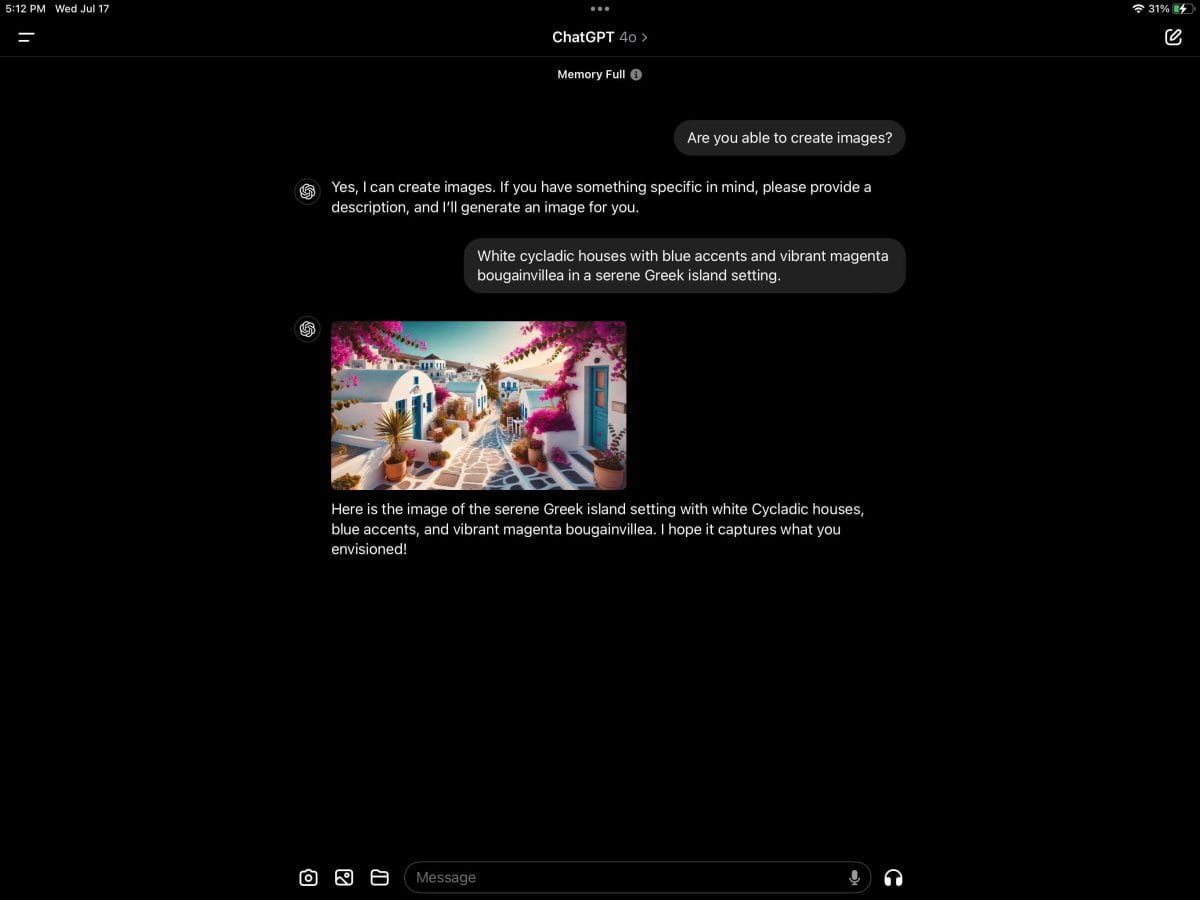
The entry point is deliberately frictionless. Open ChatGPT — free account or Plus. In the message box, describe what you want. There’s no mode to switch into, no separate tool to select. Just describe.
For a free account, you’ll get roughly 2–3 images per day before hitting limits. For Plus ($20/mo), you get 50 images per 3-hour rolling window. The limit resets automatically — no token pools to manage, no credit balances to track. This simplicity is intentional and is one of DALL-E 3’s most underrated advantages over alternatives that require managing credit systems.
The first generation usually takes 10–25 seconds. You get one image (sometimes two if you ask for “a few options”). Below the image, ChatGPT typically adds a brief note about what it interpreted from your prompt — which is useful for understanding why the result looks the way it does, and gives you a clear hook for follow-up instructions.
The iterative refinement is where DALL-E 3 / the ChatGPT pipeline becomes genuinely useful. You can say:
And ChatGPT will honor the constraints. It won’t reinterpret the outfit. It won’t change the lighting style. It updates what you specified and preserves what you didn’t. Earlier image tools had no concept of “keep everything else the same” — every generation was a fresh roll of the dice. The conversational context changes this entirely.
Prompt adherence is the stat that defined DALL-E 3’s era. Most AI image generators at the time struggled with multi-object scenes where each object had distinct attributes. “A tall woman in a green jacket standing next to a short man in a blue hat, both looking at a red door” — models like Stable Diffusion 1.5 or early Midjourney would often muddle the attributes: the hat might be green, the jacket might be on the wrong person, the door color might be wrong.
DALL-E 3’s training on synthetically generated, high-detail captions fixed this for the most common cases. It correctly parses attribute binding — matching descriptors to the correct objects. It handles spatial relationships (“to the left of,” “above,” “in the foreground”) better than prior generations. And it handles counts: “three dogs” actually gives you three dogs, not a dog-shaped blur.
Where prompt adherence still breaks down: very complex compositions with many objects and many simultaneous constraints, highly abstract conceptual prompts (“the feeling of a Sunday afternoon in 1987”), and any scene that requires accurate photorealistic rendering of specific real-world locations or identifiable people (OpenAI’s safety filters actively block these).
bench –metric=prompt-adherence estimated relative scores
The chart tells the story concisely: DALL-E 3 wins on literal prompt fidelity. Midjourney wins on aesthetic output. Ideogram wins on text accuracy. The right tool depends entirely on what you’re making.
One of DALL-E 3’s genuine improvements over DALL-E 2 was text rendering. Earlier models would hallucinate plausible-looking but nonsensical letter sequences — you’d ask for a sign that says “OPEN” and get “OPEM” or “0PEN” in a font that looked correct from across the room. DALL-E 3 dramatically improved this. Short words and simple phrases — a shop sign, a headline, a label — are rendered correctly a significant percentage of the time.
The practical ceiling: DALL-E 3 handles short text reliably, struggles with more than 5–6 words, and can produce subtle character transpositions that only show up on close inspection. For anything where text accuracy is the point — a poster headline, a business card, a logo with a specific wordmark — Ideogram 2.0 is the correct choice. Ideogram’s text accuracy rate of 82% on dense multi-word prompts leaves DALL-E 3’s ~62% clearly behind.
If you’re generating a logo that includes your brand name, verify every character in the output. DALL-E 3 will often get the first and last letter right but transpose characters in the middle. For type-critical work, use Ideogram or plan to retouch in a vector editor. The gpt-image-1 successor improves on this, but the issue is not fully solved.
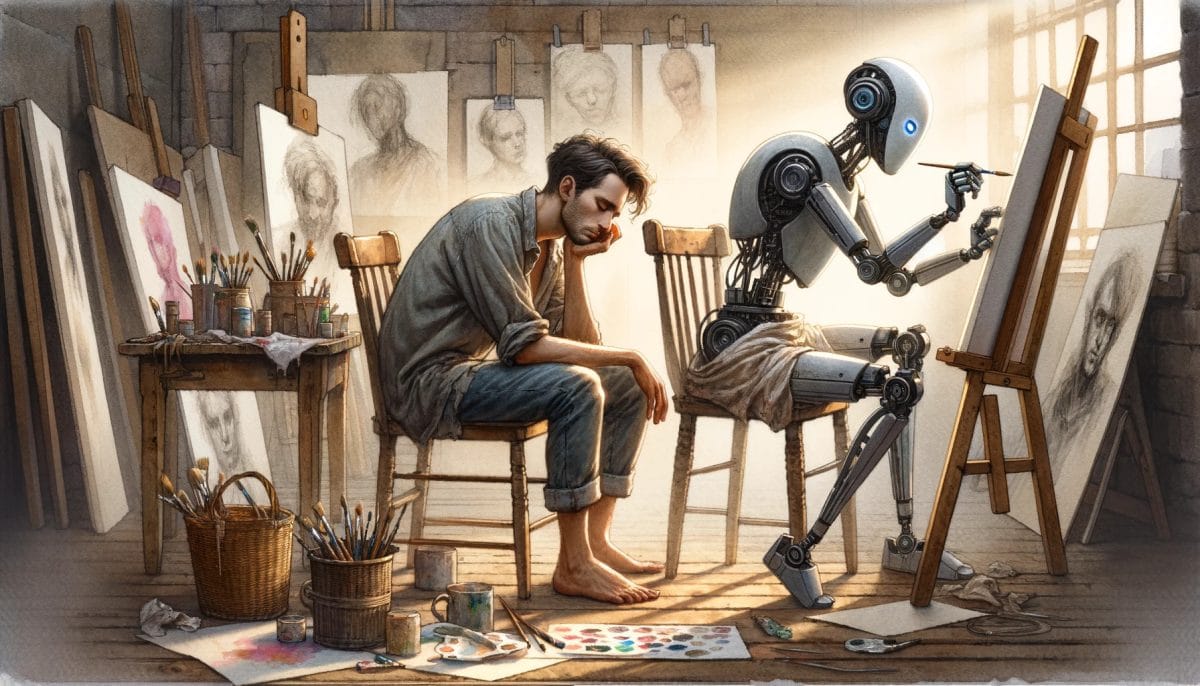
A small SaaS team needed an Instagram graphic to announce a new integration. Brief: a clean, modern illustration of two app interfaces connecting, dark background, teal accent color, no text on the image itself (they’d add the headline in Canva).
First generation came back with the right structure — two stylized app windows with a connecting arc — but the color was more blue than teal, and the style felt generic. Turn two: “Make the accent color more teal, closer to #00C8A0. Give the illustration a slightly isometric perspective.” The color improved substantially. Turn three: “The connecting arc looks too thin and hard to read. Make it thicker, with a glow effect.” Done.
Turns four through six were fine-tuning the shadow depth and cropping ratio. The final result wasn’t something a designer would frame, but it was a clean, on-brand illustration that fit the Instagram square format and read correctly at thumbnail size. Usable in under 20 minutes without opening Figma.
The brief: a hero image for an article about the psychology of overspending. Conceptual, not literal — no credit cards, no shopping bags. Something that communicates “desire vs. restraint” in a visually interesting way.
Turn one: “A split image. Left side: warm golden light, hands reaching toward floating objects — a watch, a pair of shoes, a piece of electronics. Right side: cool blue light, the same hands pulling back, calm and still. Photorealistic style.” The concept translated remarkably well. Left and right lighting split was correct. The “reaching vs. pulling back” posture was legible. Objects were accurate.
The only issue: the electronics on the left side were generic and ambiguous — looked more like a calculator than anything premium. Turn two specified “a sleek laptop and wireless headphones.” Fixed. Two more turns adjusted the overall brightness (the blue side was too dark for web) and the aspect ratio (needed 16:9, not square). Final image was genuinely strong — better than most stock photo options for this conceptual brief.
A small candle brand needed lifestyle backgrounds — scenes where the product would be composited in post. Brief: a range of moods (morning light, evening ambiance, outdoor summer, cozy winter), all with a neutral surface area where the product jar could sit.
DALL-E 3 handled this well. Prompts like “A white marble kitchen counter photographed in soft morning light, warm golden hour, a clear neutral space in the foreground for a product, blurred background with greenery through a window, editorial photography style” produced consistently usable background plates. Eight variants across four moods, with two per mood for client choice.
Where it fell short: highly specific textures on the surface (the client wanted a particular rough-hewn wood grain, not the generic version DALL-E produced), and the photos occasionally had subtle AI artifacts in the blurred background regions that showed up when printing large. For web thumbnails, they were perfect. For print collateral, retouching was needed.
DALL-E 3 was available via OpenAI’s API from late 2023 through May 12, 2026. The pricing was straightforward: per-image, tiered by resolution and quality setting. Standard quality at 1024×1024 was $0.04 per image; HD quality at 1024×1024 was $0.08; HD at 1792×1024 or 1024×1792 ran $0.12 per image. Compared to alternatives, these were competitive rates for a hosted model with no infrastructure to manage.
The API call was simple — send a text prompt, specify resolution and quality, get an image URL back. Unlike newer multimodal model APIs, it didn’t require a full conversation context structure. This simplicity made it easy to integrate into content pipelines, automation workflows, and apps with minimal engineering lift.
response = client.images.generate(
model=”dall-e-3″,
prompt=”A moody editorial photo of a hand holding a coffee cup near a rain-streaked window”,
size=”1792×1024″,
quality=”hd”,
n=1,
)
print(response.data[0].url)
That API is gone. If you have production code calling model="dall-e-3", it will fail as of May 12, 2026. The migration path is to GPT Image 1.5 or GPT Image 2, which use the chat completions API with multimodal output. The new API is more capable — context-aware image generation, better text rendering, stronger instruction following — but the integration pattern is different and the per-image costs have shifted. Check OpenAI’s current pricing page for exact numbers, as these were in flux through Q2 2026.
Migrate to gpt-image-1 via the chat completions API. The new model accepts images as inputs (inpainting, editing) that DALL-E 3 could not handle via a simple prompt call. It also has native text rendering improvements. The migration is worth doing even if your DALL-E 3 integration was working well.
The cleanest way to think about DALL-E 3 / ChatGPT image generation access is by tier:
The value proposition for Plus is straightforward: if you use ChatGPT for anything else — writing, coding help, research — the image generation is effectively included. There’s no separate image generation subscription to evaluate. The marginal cost of adding image generation to an existing Plus subscription is zero.
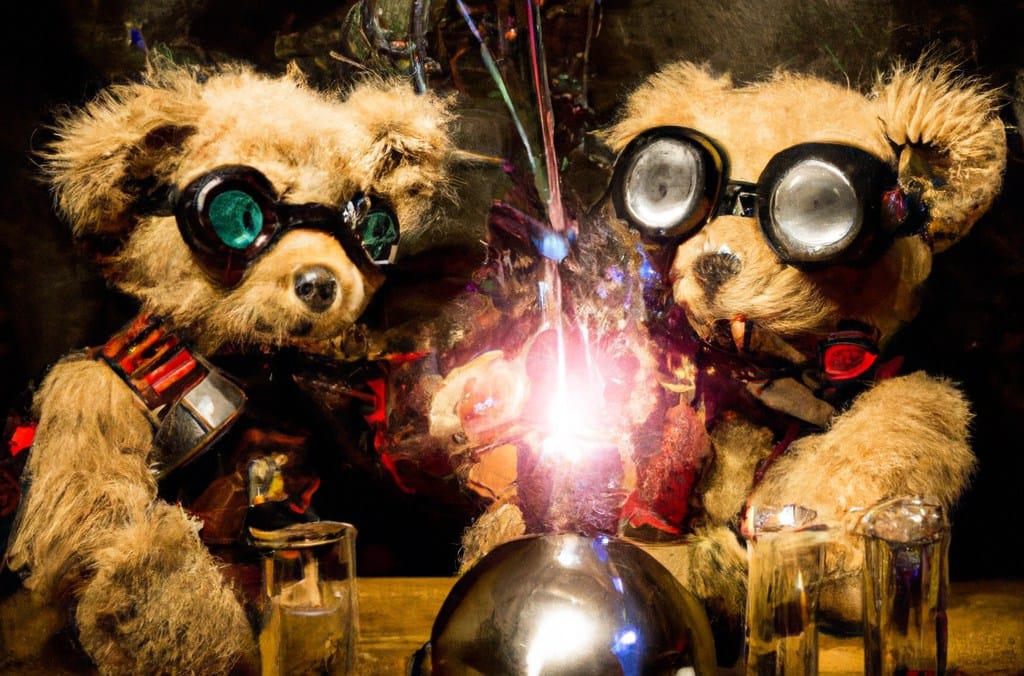
a/dall-e-3 b/midjourney
Midjourney is the aesthetic gold standard in AI image generation. Its v6 and v7 updates in 2024–2025 produced images that consistently read as art rather than AI output. It runs entirely in Discord (a workflow many designers find cumbersome) and has no conversational interface. The comparison comes down to: do you want control, or do you want beauty?
Verdict: DALL-E 3 for usability and control. Midjourney for output you want to frame. Most professionals end up using both — DALL-E 3 for concept iteration, Midjourney for final hero images.
a/dall-e-3 b/ideogram
Ideogram 2.0 and 3.0 built their entire identity around one problem DALL-E 3 never fully solved: rendering text inside images with accuracy and typographic quality. If you’re generating poster designs, social media graphics with headlines, or anything where letters matter, this comparison is the one to read carefully.
Verdict: Ideogram for any image where text inside the image is the point. DALL-E 3 for general creative work where text is an incidental element you’ll verify and retouch if needed.
For image series where visual consistency matters (e.g., eight blog post headers that need to share a style), describe the exact style attributes in a reusable sentence and paste it at the end of every prompt: “Minimal editorial photography style, soft natural light, muted warm palette, clean negative space.” Treat it like a style class you append. It’s not as reliable as a reference image, but it significantly reduces variance.
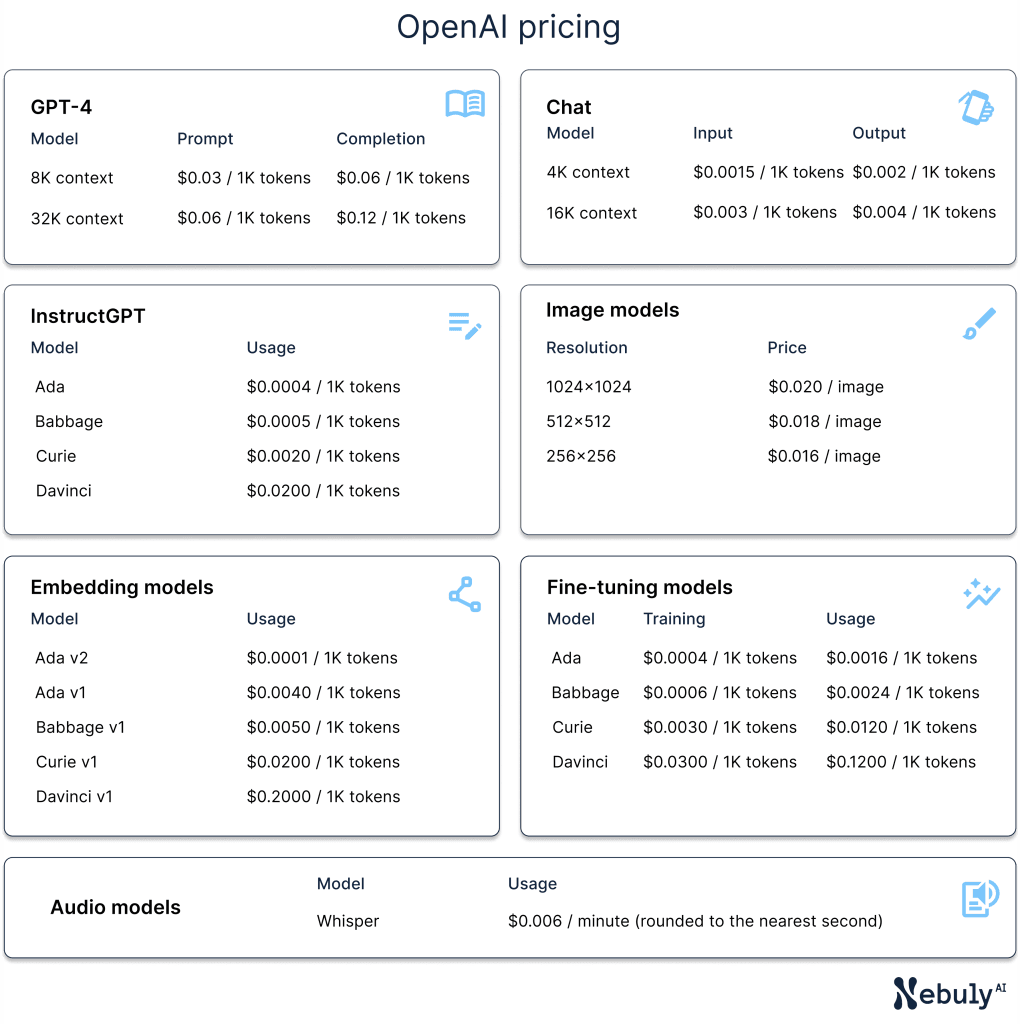
The DALL-E 3 API endpoints were removed on May 12, 2026. In ChatGPT, the image backend quietly transitioned to gpt-image-1 in December 2025. The ChatGPT image interface still works exactly the same — you just aren’t talking to DALL-E 3 anymore. For most users, nothing changed day-to-day. Developers need to migrate API integrations to gpt-image-1.
The key architectural difference: DALL-E 3 was a separate model called by ChatGPT as an external tool. Each generation was an isolated call with no memory of the conversation. GPT Image 1 is native to the model — image generation happens inside the same neural network that processes text. This gives it real multi-turn continuity, better context retention across a session, and improved text rendering. It also allows image inputs (editing, inpainting) that DALL-E 3 could not handle in the chat interface.
No. Free ChatGPT accounts can generate images — approximately 2–3 per day with a 24-hour reset. Plus ($20/mo) raises the limit to 50 images per 3-hour window. For casual personal use, free is sufficient. For any production workflow, Plus is the right tier.
OpenAI’s content policy applies to image generation with additional restrictions beyond text. The model declines requests for: real identifiable people (by name or recognizable likeness), violent or graphic content, sexual content, certain political imagery, and a range of other categories. The filters err on the side of over-refusal — you’ll hit declines on prompts that seem clearly benign. The workaround is usually reframing: describe the scene rather than naming people, emphasize the artistic or illustrative intent, or simplify the elements that are triggering the refusal.
OpenAI’s terms grant commercial usage rights for images generated via ChatGPT and the API, subject to the usage policies. The key practical issue is not copyright in the generated image (you have usage rights) but potential third-party IP in the training data — if you generate something that closely resembles a copyrighted character or artwork style, that’s a separate risk OpenAI’s terms don’t indemnify you against. For commercial use, avoid generating images that are clearly derivative of specific copyrighted works.
Use DALL-E 3 (via ChatGPT) for rapid concept iteration, blog graphics, and social assets where you need literal adherence to a specific brief. Use Midjourney for hero images, brand photography replacements, and any output that needs to look premium and polished. The workflows complement each other: rough out concepts in ChatGPT, then generate the final hero in Midjourney with a refined prompt drawn from what you learned.
DALL-E 2 was removed from the API on the same timeline as DALL-E 3 — May 12, 2026. It had already been superseded in the ChatGPT interface by DALL-E 3 in late 2023. For historical reference, DALL-E 2 introduced inpainting and outpainting as key features; DALL-E 3 improved prompt adherence dramatically. Both are now succeeded by the gpt-image model family.
Flux is the leading open-source image generation model as of 2026, strong on photorealistic output and available via self-hosting or API through third-party providers. Its main advantages over DALL-E 3: no content policy refusals, cheaper API cost, and no dependence on OpenAI’s infrastructure. Its disadvantages: no native conversational interface (you need a front-end to use it), no ChatGPT-style prompt enrichment, and more variance in output quality depending on how you’re hosting it.
DALL-E 3 earned its reputation by doing something no prior image generator had done well: respecting the prompt. If you told it what you wanted, it made a genuine effort to give you that, not an approximation shaped by what the model found aesthetically convenient. For non-technical users, that one change — from “describe a vibe and hope” to “describe a scene and get it” — was transformative.
In 2026 the model itself is deprecated, but its successor gpt-image-1 is embedded in the same interface and does everything better. The ChatGPT image pipeline is still the most accessible way for a non-specialist to go from idea to useful image in under five minutes. It’s not where you go for gallery-ready art (that’s Midjourney), and it’s not where you go for precise typography (that’s Ideogram). But for the vast middle ground — marketing assets, blog illustrations, concept explorations, and anything where a usable image on a deadline beats a perfect image next week — it remains the right starting point.
Every verified price, limit, and model change we have tracked for DALL-E 3.
One email when DALL-E 3 changes price or limits. No account, no spam.