AI Tool

Resemble AI
Resemble AI
Resemble AI
Voice cloning, real-time TTS, deepfake detection and PerTH watermarking in one API-first platform built for developers and enterprises.
Voice cloning, real-time TTS, deepfake detection and PerTH watermarking in one API-first platform built for developers and enterprises.
Resemble AI was founded in 2019 by Zohaib Ahmed and Saqib Muhammad, both based in Toronto, Canada. The origin story is a product problem: voice acting in video games couldn’t keep pace with frequent content updates. Every patch, every new line of dialogue needed a studio session. The founders — both with deep-learning backgrounds from Magic Leap and BlackBerry — saw the obvious fix and built it.
The earliest version of the product was a TTS studio aimed at game developers and interactive media. That origin shaped everything that followed: the API-first architecture, the emphasis on per-character voice consistency, the fine-grained emotion controls. Resemble was never designed as a “paste text, get MP3” tool for casual creators. It was designed for developers who needed to integrate synthetic voice into products and pipelines.
In 2023, the company raised $8M with participation from notable backers and started broadening the platform beyond pure generation. The recognition that AI voice cloning could be weaponized — used in fraud, disinformation, and non-consensual synthetic media — prompted a second strategic bet: build the detection infrastructure alongside the generation tools. This became Resemble Detect and the PerTH watermarking system, arguably the most technically ambitious pieces of the current product.
The 2025 launch of Chatterbox — an open-source, MIT-licensed TTS model that outperformed ElevenLabs in independent blind evaluations — cemented Resemble’s positioning as the developer-serious alternative in the voice AI market. It wasn’t a typical company move to open-source your flagship model, but it accelerated adoption and signaled confidence in the enterprise and security stack that sits above it.
By 2026, Resemble runs three distinct product lines in parallel: voice creation (Generate), deepfake detection (Detect), and watermarking (Verify). The bet is that enterprises who generate AI voice will eventually need all three, and it’s better to own the full stack than to compete with ElevenLabs on audio quality alone.
The homepage pitch positions Resemble around three verbs: Generate. Verify. Detect. That’s an unusually honest framing — most AI voice tools only want to talk about the generation half.
The product breaks down into five major capabilities:
The API is the common thread through all of it. REST, Python SDK, Node.js SDK, WebSocket streaming. Everything is programmable. The web UI exists and is functional, but it’s clearly secondary to the developer experience. If that sounds limiting, it is — this is not a Descript or Murf AI for non-technical users. If you’re a developer or work in a technical organization, it’s a feature.
Resemble offers two cloning tiers that reflect a real quality tradeoff, not just a marketing tier. Rapid Clone needs 10 seconds of audio and returns a usable voice in under a minute. For most conversational agent applications, it’s more than sufficient. Professional Clone requires 10 to 25+ minutes of high-quality source material and a 40-minute training run. The result is a voice with a full emotional range — capable of delivering “commercial,” “phone agent,” “conversational,” and custom variants from a single natural-language prompt.
What sets Resemble’s cloning apart from simpler TTS tools is the zero-shot multilingual capability. Chatterbox Multilingual supports 23+ languages and retains vocal identity across all of them from a single cloned voice. You clone in English, you get the same voice in Spanish, Japanese, Portuguese — without re-recording. For global product teams and dubbing pipelines, this is the most practically useful capability in the toolkit.
Every cloned voice comes with built-in PerTH watermarking on every output file. This is not optional — and it’s the right call. You can’t accidentally distribute an unwatermarked AI voice file from Resemble. For enterprises concerned about talent IP protection and EU AI Act compliance, this removes an entire class of legal and operational risk.
Resemble requires consent verification before cloning a voice. This is a platform-level enforcement, not just a terms-of-service checkbox. For enterprise deployments, they support custom consent workflows via the API so your own product can handle talent approvals end-to-end without Resemble’s UI being in the loop.
In 2025, Resemble released Chatterbox under an MIT license — available on GitHub and Hugging Face with no usage caps. In a blind evaluation, 63.75% of evaluators preferred Chatterbox over ElevenLabs when comparing natural speech quality from identical inputs. That number has since been revised to ~65% in updated study reports.
Three things make Chatterbox technically notable beyond its benchmark score:
Emotion exaggeration control. A single parameter lets you dial the emotional intensity from flat to dramatic. Chatterbox is, as of mid-2026, the only open-source model with this capability. You can go from a neutral product announcement to a high-energy sales pitch by changing one number — without re-writing your TTS prompts.
Paralinguistic tags. Write [sigh], [gasp], [laugh] directly in your text and Chatterbox performs them naturally as part of the synthesized output. This sounds like a small feature but it’s transformative for audiobook narration, game dialogue, and interactive storytelling — places where a perfectly flat “human-sounding” voice is worse than a slightly imperfect expressive one.
Chatterbox Turbo is the production-optimized variant: 350M parameters, 75ms latency, 6x faster than real-time inference on a single GPU, with built-in PerTH watermarking on every output. It’s what you use when you’re building a real-time voice agent and latency is a hard constraint.
client = resemble.Client(api_key=”YOUR_KEY”)
# Real-time TTS with emotion control
audio = client.tts.generate(
text=”I can’t believe we pulled it off. [laugh] We actually did it.”,
voice_id=”your-cloned-voice-id”,
model=”chatterbox-turbo”,
emotion_exaggeration=0.8, # 0.0 = flat, 1.0 = max
watermark=True # PerTH on by default
)
# WebSocket stream for <75ms TTFS
stream = client.tts.stream(
text=long_script,
voice_id=”your-cloned-voice-id”,
model=”chatterbox-turbo”
)
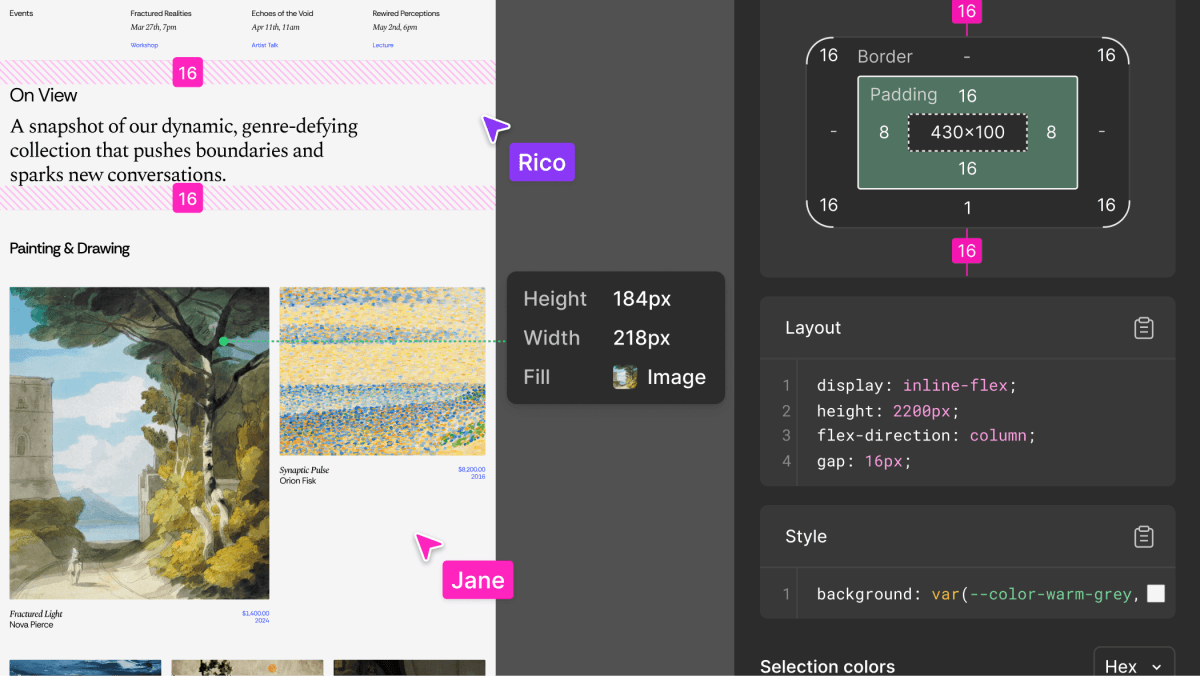
Speech-to-speech (S2S) is where Resemble’s product moves from “voice generation tool” to “voice infrastructure.” The capability: take a live audio stream — a human speaking into a microphone, a phone call, a voice agent — and transform it into a target voice in real time, preserving emotional tone, cadence, and delivery.
Chatterbox Turbo achieves 75ms latency in S2S mode. For context: human conversation has a ~200ms natural gap between turns. Sub-100ms processing means the synthetic voice overlay is imperceptible in a live call. The platform supports WebSocket delivery for continuous streaming and HTTP for batch or single-utterance conversions.
The practical applications run wide: voice agents that sound like a specific brand voice rather than a generic TTS voice, real-time translator overlays for video calls that preserve the speaker’s own vocal character, accessibility tools that let non-verbal users communicate through their own cloned voice. For conversational AI specifically — the fast-growing category of LLM-powered phone agents and voice bots — S2S at 75ms is production-grade. The competing latency benchmark from ElevenLabs sits at 200-300ms on their realtime product.
bench –metric=latency –mode=realtime-s2s ttfs comparison · ms
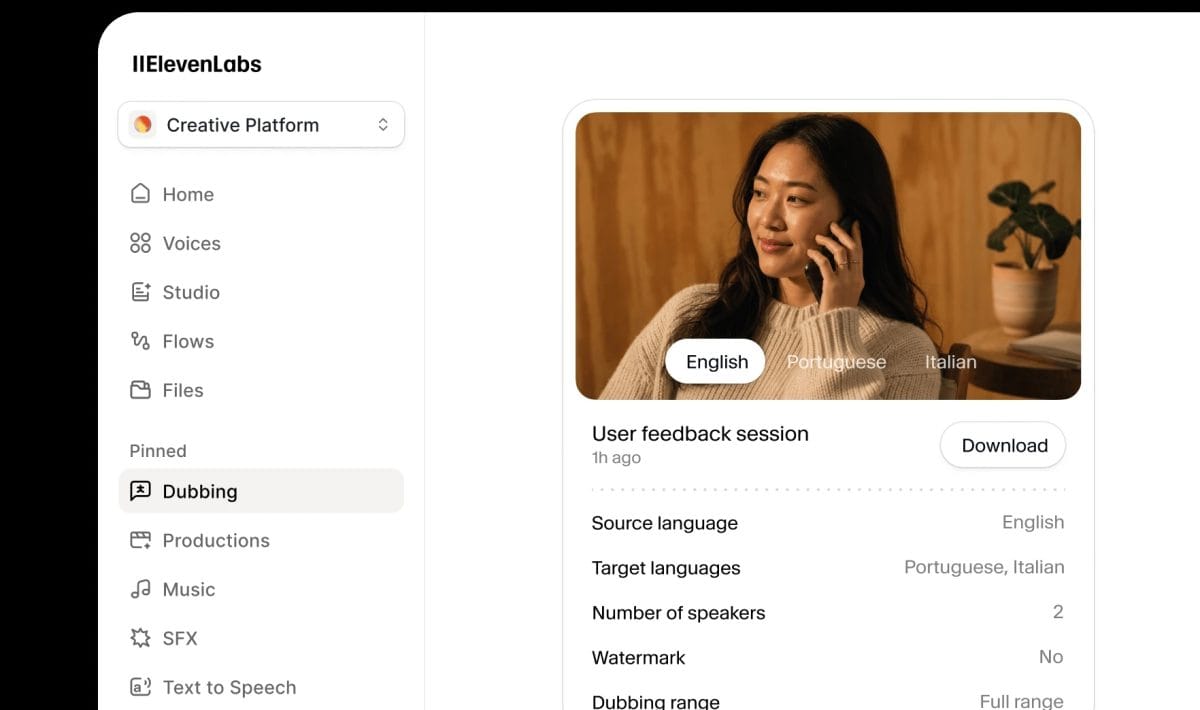
Resemble Localize is the dubbing product — and it does more than translate and re-read. The pipeline takes a source audio track, transcribes it, translates, and then synthesizes the output in the target language using either your cloned voice or a new zero-shot clone derived from the original speaker. The emotional tone, pacing, and delivery of the original recording are preserved in the translated output.
At 100 supported languages and growing, the coverage is among the widest in the market. The key differentiator over generic TTS dubbing tools is the identity preservation: a video of a CEO speaking in English comes out in Mandarin and Portuguese still sounding like that CEO, not a generic TTS voice approximation. For enterprise video content, e-learning localization, and broadcast media, that matters considerably — audiences trust content more when the speaker sounds consistent.
The Localize pipeline handles three common failure modes that cheaper dubbing tools don’t: it manages timing alignment so the translated audio doesn’t overflow the video frame, it supports contextually appropriate translation rather than literal word-for-word output, and it handles multilingual detection — so a source file that switches between languages mid-track doesn’t break the pipeline.
The scenario: a SaaS company wants to release their annual product launch in Spanish, French, German, Portuguese, Japanese, Korean, Hindi, and Mandarin — simultaneously with the English version. Traditional workflow: hire 8 voice actors, coordinate 8 studio sessions, manage translation review per language, sync audio to video. Timeline: 3-4 weeks minimum, $5,000-$15,000 budget.
With Resemble Localize: clone the CEO’s voice from existing recordings (Professional Clone, 40 min training). Submit the English source through the Localize API with target language codes. Each language output preserves the CEO’s vocal character, emotional peaks during product reveals, and natural pacing. The output audio is PerTH watermarked and C2PA provenance-tagged on every file.
The manual review step — a native speaker checking each language for contextual accuracy and brand-appropriate tone — still takes time per language, but the generation itself collapses from weeks to hours. Translation review, not audio production, becomes the bottleneck.
This is where Resemble diverges most sharply from every other voice AI company. Rather than pretending the downsides of AI voice don’t exist, they built a detection product that you can deploy against any synthetic audio, image, or video — including content generated by their own platform.
DETECT-3B Omni is the flagship model: 3 billion parameters, multimodal (audio, image, video in a single architecture), covering 160+ generative AI models, with sub-300ms detection latency. It achieves 98.1% overall accuracy across thousands of files per day at production scale. Detection accuracy against specific tools: DALL-E 3 (98%), Midjourney (98%), Flux v2 (99%), GPT-4o image (99%).
The detection approach is what makes it technically interesting. Rather than pattern-matching known fakes, DETECT-3B learns the statistical artifacts that generative architectures leave in raw audio and pixel signals. It doesn’t need transcription, doesn’t need prior enrollment of a speaker’s voice, doesn’t require knowing which tool generated the content. This means it generalizes to novel generative models without being retrained — the company claims zero-day coverage for new generative models in under an hour.
The practical deployment contexts are increasingly critical in 2026:
The EU AI Act requires watermarking on all AI-generated content effective August 1, 2026, with fines up to €35 million for non-compliance. If your product generates voice content for EU audiences and you haven’t embedded provenance — Resemble’s Verify and PerTH stack is the fastest path to compliance.
PerTH (Perceptually Transparent Hashing) is Resemble’s watermarking system — and they open-sourced it under MIT license, which deserves mention. The decision enables independent auditors, regulators, and security researchers to verify how watermarks are embedded and detected without relying on Resemble as a black box. That’s a meaningful trust signal in a category where trust is the product.
Technically: PerTH embeds watermarks at the signal level, not metadata. Metadata watermarks are trivially stripped — re-encode the file and the tag is gone. Signal-level watermarks survive MP3 compression at 128kbps (98%+ recovery rate), format conversion, replay attacks (playing audio through a speaker and re-recording), and standard audio processing chains. Removing a PerTH watermark without audibly degrading the file is, practically speaking, extremely difficult.
What the watermark carries: a provenance record linking the audio file to the generating system, the voice model used, the timestamp, and optionally the consenting talent’s identity. When combined with C2PA content provenance standards — which Resemble supports — you get an audit trail that can survive a legal challenge.
Every file Chatterbox Turbo generates comes PerTH-watermarked by default. You can’t turn it off. For enterprise customers who’ve spent time in legal conversations about AI-generated content liability, “can’t turn it off” is a feature, not a limitation.
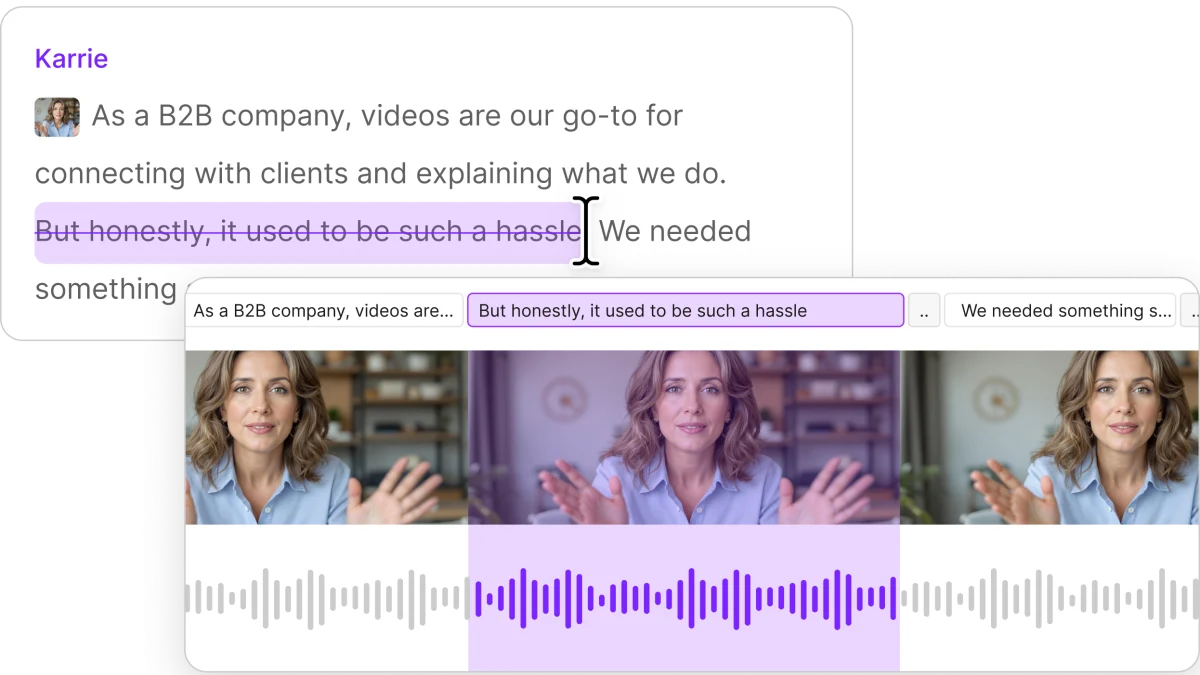
The API is genuinely well-designed. REST endpoints are clean, the Python and Node.js SDKs are idiomatic, WebSocket streaming for real-time use cases works as documented, and the pricing model is consumption-based at rates that make prototyping accessible before committing to enterprise contracts.
Rate breakdown from the Flex tier as of mid-2026:
The TTS rate is competitive. The detection rate is high relative to generation — $0.04/second of audio for deepfake detection adds up fast if you’re screening large libraries. Enterprise contracts offer volume discounts up to 80%, which is where the economics change materially for production workloads.
The docs at docs.resemble.ai are thorough and code-first. Webhook callbacks on voice training completion, custom pronunciation management, SDK method signatures that mirror the REST interface — these are the kind of details that separate a developer-facing product from one that was designed for a UI and had an API bolted on after the fact.
The TTS API exposes three delivery patterns in one endpoint: WebSocket streaming (200ms TTFS, for conversational agents), HTTP streaming (for longer-form content), and synchronous (for short notifications and pre-rendered assets). Match the mode to your latency requirement — you’ll waste money using WebSocket streaming for batch audio generation that doesn’t need it.
The scenario: a fintech company wants a phone support agent that sounds like their actual brand — same voice as their radio ads and IVR system — rather than a generic TTS robot. The voice talent is contracted and has consented to cloning for this specific use.
Implementation: Professional Clone trained on 15 minutes of studio recordings (40-min training run). LLM generates the text response. Resemble S2S via WebSocket converts to audio in the cloned voice. Total round-trip: LLM latency (~400ms) + Resemble TTFS (75ms) = under 500ms before the first word plays. That’s within the acceptable threshold for a phone conversation.
Every audio output file is PerTH watermarked automatically, so the company has provenance records for every interaction — relevant for financial services compliance and dispute resolution.
The scenario: an enterprise finance team receives a voice message from the “CFO” authorizing a $2M wire transfer. The message was AI-generated. The treasury system is integrated with Resemble Detect — every inbound voice authorization is screened before triggering payment workflows.
The DETECT-3B Omni model processes the audio in under 300ms, returns a confidence score, and flags the file for human review. The watermark check simultaneously returns no provenance record — the file was not generated by any Resemble-watermarked system, consistent with an external deepfake attack rather than an internal synthetic voice workflow.
The wire transfer is blocked. The fraud attempt is logged with the full audio file, the detection confidence score, and a timestamp-anchored audit record for the compliance team.
a/resemble-ai b/elevenlabs
ElevenLabs is the market-share leader in AI voice — more widely known, stronger creator tools, more polished consumer-facing UI. Resemble is narrower in scope but deeper in the places that matter for enterprise and developer use cases. The comparison reveals two different bets on what the AI voice market actually needs.
Verdict: ElevenLabs for content creators, podcasters, and anyone who wants a great voice without touching an API. Resemble for developers building voice products, enterprises deploying voice agents, and any organization that needs the deepfake detection + watermarking layer baked in. The two aren’t really competing for the same user.
The web interface is functional but dated compared to ElevenLabs or Murf AI. If your workflow lives in a browser and you’re not writing code, Resemble will feel clunky. The platform was designed API-first and the UI shows it. For non-technical users — a marketing manager who needs to generate a quick voiceover, a content creator building an explainer — the friction is real. This is a deliberate product tradeoff, but it limits who can realistically evaluate the tool.
The Flex pay-as-you-go tier has clean per-second pricing. The Enterprise tier says “custom” and requires a sales call. For organizations used to self-serve pricing pages and immediate trial access, this creates friction at the evaluation stage. The detection rates ($0.04-0.07/second) also add up fast in high-volume screening applications — cost modeling for production use requires more careful math than the headline rates suggest.
The Flex plan starts at $0 but charges from the first API call. There’s no meaningful free sandbox to hear what your cloned voice actually sounds like before committing credits. ElevenLabs gives you 10,000 characters per month on the free tier — enough to evaluate voice quality for a real use case. Resemble’s approach forces commitment before confidence, which lengthens the evaluation cycle for smaller teams and indie developers.
Dubbing into 100 languages is genuinely impressive, but at scale — 50+ videos, custom lip-sync requirements, complex per-language review workflows — you end up in a sales conversation anyway. The API supports programmatic dubbing, but advanced localization at enterprise volume still involves Resemble’s team directly. That’s not unusual for enterprise tooling, but worth knowing before assuming you can self-serve your way through a large dubbing project.
ElevenLabs has a large creator community, extensive third-party integrations, and widespread tutorials. Resemble’s documentation is excellent but its third-party ecosystem is much smaller. If you hit an unusual integration issue, the ElevenLabs community will have seen it before. With Resemble, you’re more likely to be working directly with their support team — good support, but a longer feedback loop than community forums.
Resemble is right for you if any of these describe your situation:
Skip Resemble if these describe you instead:
Resemble’s pricing is consumption-based and genuinely developer-friendly for prototyping. The Flex tier has no monthly minimum — you pay per second of audio processed or generated, and credits never expire.
The math for common workloads:
The Professional voice clone is $5/month per voice on the Flex tier — very low for what it delivers. Rapid Clone is $2/month. Team seats are $20/month per user. For most developer teams, the total monthly Flex cost is low until you’re running production-scale detection workloads.
Enterprise pricing offers volume discounts up to 80%, dedicated SLAs, and custom model training. The economics flip dramatically at scale: 10,000 hours of TTS annually at list price is $216,000; with an 80% enterprise discount that’s $43,200. Still enterprise software pricing, but competitive against building the infrastructure in-house.
Resemble’s enterprise tier is genuinely enterprise-grade in ways that matter to regulated industries. SOC 2 Type II certification is standard. HIPAA compliance is supported — unusual in the AI voice space, where most competitors don’t cover healthcare use cases. Air-gapped deployment is available: the full Chatterbox stack can run on your own infrastructure, isolated from public networks, which is the requirement for defense contractors and certain government deployments.
SSO/SAML authentication, C2PA content provenance integration, Zero Retention Mode (media permanently deleted after analysis, never accessible to Resemble staff), and custom model training are all enterprise-tier features. The Zero Retention Mode is particularly relevant for deepfake detection deployments where the content being screened may include sensitive or confidential media.
Because Chatterbox is MIT-licensed, you can deploy it completely independently without a Resemble contract. The enterprise value-add is the Detect + Verify stack, the managed API infrastructure, and the SLA. If your only need is TTS generation on isolated hardware, the open-source route may cost less — though you trade away the watermarking and detection capabilities that come with the managed product.
ElevenLabs if you’re a creator who needs great audio quality with minimal friction. Resemble if you’re building a product, need real-time voice agents, or operate in a context where deepfake detection and watermarking are requirements. They serve different primary users.
Yes — available on GitHub and Hugging Face with no usage caps or royalties. You can deploy it commercially on your own infrastructure. The managed API and the Detect + Verify stack are where the paid product lives.
Human conversational gaps average ~200ms. Sub-100ms synthesis is imperceptible in a live call — the LLM inference time (~400ms) will be your bottleneck, not the TTS. Chatterbox Turbo at 75ms is genuinely production-grade for phone and voice agent use cases.
Yes — HIPAA support is documented on the enterprise tier, including data processing agreements. Confirm the specifics with their sales team for your use case, as configurations matter for compliance.
MP3 compression at 128kbps (98%+ recovery rate), format conversion, re-encoding, and replay attacks (playing audio through a speaker and re-recording). Removing it without audibly degrading the file is extremely difficult. The system is MIT-licensed so anyone can verify the embedding and detection methodology independently.
No traditional free tier. The Flex plan starts at $0 but bills from the first API call — credits don’t expire. There’s no committed free quota like ElevenLabs offers. If you need to hear voice quality before committing, the Chatterbox open-source demo pages are the best free evaluation path.
Yes — that’s the core value proposition. DETECT-3B covers 160+ generative AI models including ElevenLabs, OpenAI, and others. It learns statistical artifacts from training data rather than pattern-matching known tools, so it generalizes to novel models.
Rapid Clone: 10 seconds — useful but limited in emotional range. Professional Clone: 10-25+ minutes of high-quality recordings — full expressive range across all emotion variants. For production voice agents, Professional Clone is worth the extra training time.
Chatterbox (generation) yes — MIT license, runs on a single GPU. DETECT-3B and PerTH watermarking are available in air-gapped enterprise deployments via contract. There’s no self-hosted community edition of the full Detect + Verify stack.
Resemble AI is not the most accessible voice tool, and it’s not trying to be. What it is: the most technically complete voice AI platform in 2026 for developers and enterprises who need generation, detection, and provenance in a single stack. The 75ms Chatterbox Turbo latency is the best published number in the market for real-time voice agents. The DETECT-3B Omni deepfake detector is the only multimodal model covering audio, image, and video in a single architecture. The PerTH watermarking is MIT-licensed and survives compression attacks that metadata tagging doesn’t.
The score is held back by the friction: no meaningful free tier to evaluate quality, a UI that trails ElevenLabs by two generations, and detection pricing ($0.04-0.07/second) that requires careful cost modeling before production deployment. For casual creators and non-technical users, ElevenLabs is a cleaner answer. For anyone building voice infrastructure or deploying AI voice in a regulated context — Resemble is the one to evaluate first.
Every verified price, limit, and model change we have tracked for Resemble AI.
One email when Resemble AI changes price or limits. No account, no spam.